
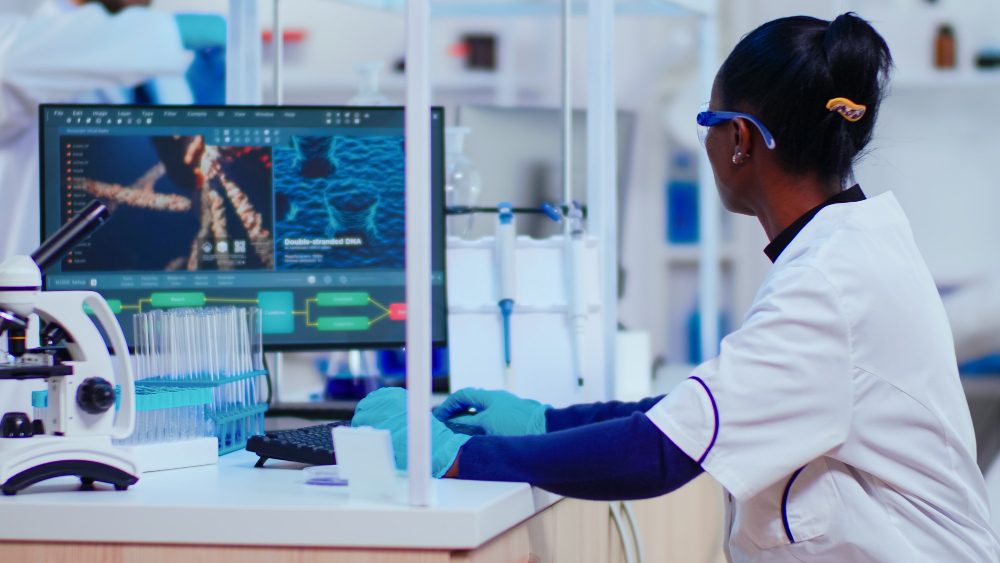
AI in Biomedical Engineering: Reprogramming Life with Code
The convergence of artificial intelligence (AI) in biomedical engineering is recoding the very fabric of the bio-digital frontier. From gene editing to AI-powered drug discovery, this fusion is enabling breakthroughs that were once the realm of science fiction.
As biology evolves into a code-driven discipline, IT professionals and researchers alike are stepping into a new era, where DNA is data and innovation is measured in both base pairs and bytes.
What is Biomedical Engineering?
Biomedical engineering is the integration of engineering design with biological insight to develop technologies that advance human health. It encompasses innovations like wearable biosensors for chronic disease management, high-resolution imaging systems for cellular diagnostics, and lab-on-a-chip platforms for rapid disease detection.
According to the NIH Intramural Research Program, biomedical engineering spans fields such as biophotonics, cardiovascular imaging, and immunochemical diagnostics, each pushing the boundaries of how we detect, monitor, and treat diseases.
Code 01: Debugging the Human Genome with CRISPR
Clustered Regularly Interspaced Short Palindromic Repeats (CRISPR) has revolutionised bioengineering, offering a precise method to edit genes by targeting specific DNA sequences. AI in biomedical engineering is actively transforming treatment for genetic mutations linked to conditions like sickle cell anaemia and Huntington’s disease.
According to Scientific American, CRISPR is also being developed for in vivo applications, with clinical trials underway for blood disorders and neurodegenerative conditions.
When paired with AI, CRISPR unlocks unprecedented capabilities. Machine learning models can predict off-target effects, optimise guide RNA sequences, and simulate gene edits before they’re performed. This synergy between AI in biomedical engineering is accelerating the path from concept to clinical application, redefining how biomedical engineering engineer solutions for genetic disorders.
Code 02: Mirroring Your Organs with Digital Twins
In the evolving landscape of AI in biomedical engineering, digital twins are transforming diagnostics and treatment planning. These data-driven models simulate how a patient’s organs might respond to therapies, enabling personalised medicine and allowing clinicians to anticipate outcomes, reduce risk, and tailor treatments with surgical precision without invasive procedures.
A Scientific American article highlights how biomedical engineering such as digital twins have entered clinical practice through FDA-approved applications, including artificial pancreases for diabetes management.
With AI processing continuous patient-specific data streams, the accuracy and predictive power of digital twins is advancing at unprecedented speed. AI in biomedical engineering is enabling a new class of medical decision-making, one where clinicians can simulate interventions in silico before deploying them in the real world.
The result? Faster diagnostics, fewer complications, and a future where medicine is not just reactive, but pre-emptive by design.
Activating the Next Generation of Prosthetic Function
Gone are the days of non-adaptive prosthetic limbs. Today’s smart prosthetics use AI to learn from user behaviour, adapting in real time to deliver personalised movement and control, making mobility a dynamic, data-driven capability.
Human Augmentation Technology like Grippy™, developed by Robobionics, integrate pressure sensors and gamified rehabilitation to simulate touch and improve dexterity. Meanwhile, AI-powered arms such as the LUKE Arm are decoding neural signals to execute complex tasks like grasping and playing instruments, as highlighted by AUOOW.
According to The Business Research Company, the global market for AI-powered prosthetics is projected to reach $3.08 billion by 2029, driven by demand across mobility, rehabilitation, and defence sectors. These innovations are not just reshaping prosthetics, they’re redefining the interface between biology and machine within Human Augmentation Technology.
Code 03: Compiling Molecules with Drug DevOps
Traditional drug development is a decade-long relay of trial, error, and exorbitant cost. But now, a new paradigm is emerging, one where molecules are no longer discovered by chance, but compiled with precision.
As AI in biomedical engineering is evolving, the pharmaceutical pipeline is being reengineered from the inside out. These machine learning models act as molecular architects and simulate chemical interactions, predict toxicity, and optimise compound structures with at the pace and precision of next-gen software ecosystems. It’s not just automation, its algorithmic intuition applied to the molecular level.
A Nature article recently reported how researchers used generative AI to design over 50,000 antimicrobial peptides in silico. Dozens of these candidates showed real-world efficacy in lab tests, with several advancing to animal trials.
What once took years of wet-lab experimentation now unfolds in weeks, compressed into digital workflows that resemble agile sprints more than scientific marathons.
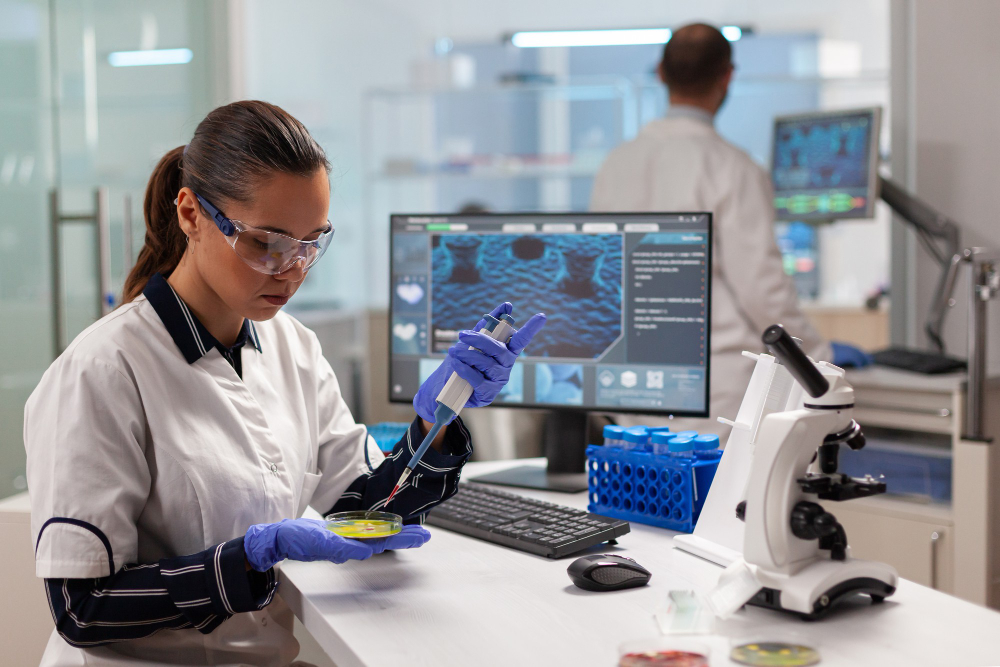
Code 04: CTRL + P for Human Tissue
What if we could print life layer by layer, cell by cell? Amid the revolution of AI in biomedical engineering, bioprinting is transforming regenerative medicine with AI’s guidance, printers now optimise cell placement, scaffold geometry, and tissue viability in real time, that is not only structural accurate but biological functional with tissues that grow, respond, and integrate with the human body.
According to Scientific American, researchers actively exploring bioprinted tissues for drug testing, reducing reliance on animal models and accelerating the path to clinical trials. This convergence of AI in biomedical engineering is redefining what it means to build life. Where once we relied on nature’s slow iterations, we now have the tools to design, simulate, and fabricate biology with the precision of code.
CTRL + P isn’t just a command, it’s a revolution in the future of medicine.
Code 05: Bioinformatics Powers Precision Medicine
Every system needs a backend, a logic layer that processes inputs, runs calculations, and delivers insight. Bioinformatics parses the raw code of life with genomes, proteomes, and cellular signals and transforms it into structured intelligence that researchers and clinicians can act on. From mapping the genetic architecture of rare diseases to modelling how a tumour might evolve under treatment, bioinformatics is the silent force powering precision medicine.
A Forbes article highlights how bioinformatics is central to tailoring therapies based on a patient’s unique genomic, behavioural, and environmental profile. Across the expanding frontier of AI in biomedical engineering, bioinformatics is the logic layer that connects discovery to deployment, ensuring that the vast complexity of living systems can be understood, simulated, and ultimately reprogrammed, one command at a time.
System Override: AI in biomedical engineering
We are no longer decoding life, we’re rewriting it. The rise of AI in biomedical engineering is enabling us to debug DNA, simulate organs, accelerate drug discovery, and fabricate living tissues with code-level precision.
As the boundaries between computation and biology dissolve, AI in biomedical engineering is not just transforming medicine, it’s engineering a new operating system for life itself.
The future isn’t waiting, it’s already compiling.
This article reflects Belgium Campus iTversity’s dedication to pioneering innovation in biomedical engineering and emerging technologies. Discover how we’re equipping future tech leaders to shape the next wave of AI-powered healthcare and bio-digital transformation.
Explore the future with us, learn more here.
- Dorijke du Toit