How to Become a Programmer: The Modern, No Nonsense Guide to Starting a Tech Career
At A Glance
Becoming a programmer involves learning a beginner‑friendly language, mastering core programming fundamentals, and building practical projects that demonstrate your skills. You don’t need a degree – a strong portfolio, consistent practice, and real‑world problem‑solving are what make you job‑ready. Programming is accessible to beginners of any age and offers strong career opportunities across industries.
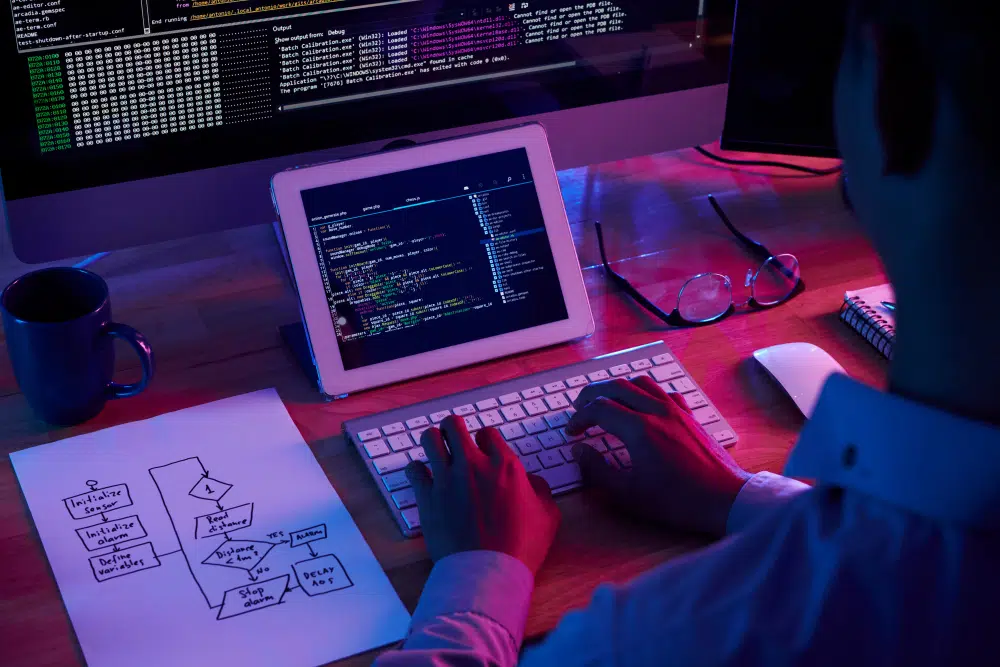
If you’ve ever typed how to become a programmer into a search bar, you’re in good company. Millions of people are exploring programming as a pathway to better careers, creative freedom, and future‑proof skills. Programming is no longer a niche reserved for maths prodigies or hoodie‑wearing geniuses. It’s a craft – learnable, practical, and increasingly essential in a world where every industry is becoming digital at its core.
Becoming a programmer isn’t about memorising syntax. It’s about learning to think differently: logically, creatively, and systematically. And the journey is far more accessible than most people realise.
Start by Understanding What Programming Really Means
Programming is the art of turning ideas into functioning systems. It’s the invisible force behind the apps you use, the cars you drive, the medical devices that save lives, and the algorithms that recommend your next favourite song.
At its heart, programming is:
- Problem‑solving – breaking big challenges into manageable steps.
- Communication – giving clear instructions to machines.
- Creation – building tools, products, and experiences.
When you understand this, the question how to become a programmer becomes less intimidating and more exciting.
Choose a Language That Matches Your Ambition
Your first programming language is your entry point, not your destiny. Choose one that aligns with what you want to build:
- Python – brilliant for beginners, AI, automation, data science, and general software
- JavaScript – the backbone of the web; essential for front‑end and full‑stack development
- Java or C# – enterprise‑grade languages used in banking, telecoms, and large systems
- C or C++ – perfect for embedded systems, robotics, gaming, and performance‑heavy applications
The trick is not to dabble in five languages at once. Pick one. Stick with it. Build momentum.
Master the Fundamentals - They’re Your Superpower
Every programmer, from junior to senior architect, relies on the same foundational concepts:
- Variables and data types.
- Loops, conditions, and logic.
- Functions and modular thinking.
- Data structures.
- Algorithms.
- Debugging.
These fundamentals are the “grammar” of programming. Once you understand them, learning new languages becomes dramatically easier.
How To Become A Programmer is About Learning To Build - Not Just Watching
You cannot become a programmer by consuming content alone. Tutorials are helpful, but projects are transformative. Start with small, confidence‑building creations:
- A personal website.
- A budgeting tool.
- A simple game.
- A chatbot.
- A data visualisation dashboard.
Each project teaches you something new: how to structure code, how to solve problems, how to think like a developer. And importantly, they become portfolio pieces that prove your ability.
Curate Your Learning Environment
The internet is overflowing with resources, but not all are equal. Look for platforms that offer:
- Structured learning paths.
- Real‑world examples.
- Hands‑on exercises.
- Community support.
- Opportunities to practise.
Whether you choose a university programme, a bootcamp, or a self‑paced online course, consistency matters more than the format.

Build a Portfolio That Tells Your Story
When employers ask how to become a programmer, what they really want to know is: “Can you build things that work?”
Your portfolio should answer that clearly:
- Host your code on GitHub.
- Write short explanations of each project.
- Show your thinking, not just your output.
- Include screenshots, demos, and links.
A strong portfolio can outweigh a degree, a certificate, or years of unrelated experience.
Join the Community - It Accelerates Everything
Programming is collaborative by nature. You’ll grow faster when you’re surrounded by others who are learning, building, and sharing. Get involved by:
- Joining online forums and Discord groups.
- Attending hackathons.
- Participating in open‑source projects.
- Asking questions and helping others.
Community is where beginners become confident and where opportunities often appear unexpectedly.
Prepare for Real World Work
To become job‑ready, you’ll need more than syntax knowledge. Employers look for practical skills such as:
- Version control (Git).
- Testing and debugging.
- Working with APIs.
- Understanding databases.
- Writing clean, maintainable code.
- Communicating clearly with teams.
These skills turn you from a learner into a professional. Technology evolves at a breathtaking pace. Frameworks change. Tools improve. New languages emerge. The best programmers stay curious, adaptable, and open to continuous learning. Becoming a programmer isn’t a destination – it’s a career built on growth.
Belgium Campus iTversity Can Help You Become a Programmer
If you’re serious about learning how to become a programmer, the right learning environment can accelerate your journey dramatically. Belgium Campus iTversity has built its reputation on producing industry‑ready IT professionals through a blend of academic depth, practical experience, and real‑world relevance.
What sets Belgium Campus iTversity apart is its commitment to future‑focused, industry‑aligned education. Every qualification is benchmarked against top European IT universities and shaped in collaboration with leading technology partners. This ensures that students don’t just learn programming – they learn the kind of programming that employers actively seek.
Your Path Into Programming Starts Now
Learning how to become a programmer is a journey built on curiosity, consistency, and practical experience. With the right guidance – and the right environment, such as Belgium Campus iTversity – you can move from beginner to industry‑ready professional with confidence. Programming rewards those who keep learning, experimenting, and building, and your first step can start today.
Frequently Asked Questions about How to Become a Programmer
- What is the first step to becoming a programmer?
Start by choosing a beginner‑friendly programming language such as Python or JavaScript and learning the
core fundamentals.
- Do I need a degree to become a programmer?
No. Many programmers are self‑taught or trained through online courses and bootcamps. A portfolio often matters more than formal qualifications.
- How long does it take to become a programmer?
Most beginners can reach job‑ready level in 6 – 12 months with consistent practice, depending on the
learning path and time commitment.
- Which programming language should I learn first?
Python is the most beginner‑friendly, but JavaScript is essential for web development. Choose based on
your career goals.
- Can I become a programmer with no experience?
Yes. Programming is accessible to complete beginners. Start with simple projects, practise regularly, and
build a portfolio.
- What skills do programmers need?
Problem‑solving, logical thinking, attention to detail, and the ability to learn continuously.
- Is it too late to become a programmer?
No. People enter programming at every age and stage of life. With consistent practice and a strong
portfolio, beginners can transition into tech at any point in their career.
- Phillip Crafford, Belgium Campus iTversity