Phillip Crafford

A man wearing a virtual reality headset interacts with floating data visualizations in a modern office. He uses hand gestures to manipulate virtual bar graphs and circular progress indicators labeled 75%, 50%, and 90%. Other people work on laptops in the background, suggesting a collaborative, tech-driven environment focused on data analysis or business intelligence.

SA’s matric IT learners passing but not mastering subjects

Serious intervention is needed in how SA schools teach specialised IT subjects, if the country is to fully take advantage of emerging technologies such as artificial intelligence (AI).

In her results announcement of the matric class of 2025, basic education minister Siviwe Gwarube noted that “quality is measured by what learners can do, and by whether opportunity stays open in gateway subjects”.

SA’s matric IT learners passing but not mastering subjects Read More »

A large group of students in school uniforms and adults in formal attire pose together in front of a branded backdrop featuring the MTN and Department of Basic Education logos. The backdrop reads “Ministerial Breakfast with the Matric Class of 2022,” indicating a celebratory event recognizing South African matriculants. The mood is formal and festive, highlighting partnership and achievement.

South Africa’s education crisis: Rethinking matric pass marks and vocational training

As South Africa reflects on the latest matric results, some in jubilation, some in sadness, academia faces a very harsh reality in that if we are, as a society, to succeed on a socio-economic level, we need to urgently rethink passing grades and a singular focus on university degrees.

It is time to have a national dialogue involving key stakeholders from government, business, academia, and civil society as to whether we are doing our youth and – as a result, our future leaders – a disservice through keeping the pass mark at 30% and 40%, even if only a minuscule percentage achieve that bare minimum in matric.

(To pass, students must achieve 40% in a home language, 40% in a further two subjects and 30% in another three additional subjects.)

South Africa’s education crisis: Rethinking matric pass marks and vocational training Read More »

A man wearing a virtual reality headset interacts with floating data visualizations in a modern office. He uses hand gestures to manipulate virtual bar graphs and circular progress indicators labeled 75%, 50%, and 90%. Other people work on laptops in the background, suggesting a collaborative, tech-driven environment focused on data analysis or business intelligence.

Trevolin is Deaf and Determined to Break Barriers of Communication

While Trevolin Pillay describes himself as “just a simple Deaf person from Chatsworth, KwaZulu-Natal”, he is also determined to break the barriers of communication between the deaf and hearing in this world.

He was born profoundly deaf, but has not allowed that to deter him or define his path to success. He was the top learner in all the grades in school and received many awards, including the DUX award.

After school, Trevolin made history as one of the first groups of six Deaf students to have completed a bachelor’s degree in IT at Belgium Campus iTversity – and the first Deaf student to achieve it magna cum laude.

Trevolin is Deaf and Determined to Break Barriers of Communication Read More »

A man wearing a virtual reality headset interacts with floating data visualizations in a modern office. He uses hand gestures to manipulate virtual bar graphs and circular progress indicators labeled 75%, 50%, and 90%. Other people work on laptops in the background, suggesting a collaborative, tech-driven environment focused on data analysis or business intelligence.

Future-ready qualifications: Preparing Students for Tomorrow’s World

The world of work is evolving at a pace never seen before. Technology, globalisation, and shifting social needs are reshaping industries and creating opportunities that demand new skills. In this environment, traditional education alone is no longer enough. Students need future-ready qualifications that equip them with adaptability, technical expertise, and vision to thrive in careers that may not even exist yet.

Future-ready qualifications: Preparing Students for Tomorrow’s World Read More »

A glowing central cube radiates bright orange and yellow light, surrounded by interconnected data channels forming a grid-like network. Binary code and illuminated nodes suggest a futuristic digital infrastructure, representing concepts like blockchain, data flow, or cybersecurity. The background is dark, enhancing the high-tech, conceptual aesthetic.

Emerging technologies: Shaping the Future of IT

Emerging technologies are innovations that are still developing but already showing significant potential to disrupt industries. They include advancements such as artificial intelligence, machine learning, blockchain, cloud computing, cybersecurity solutions, and extended reality. These technologies are not just tools; they are catalysts for change, reshaping the way IT systems are designed, managed, and applied across sectors.

Emerging technologies: Shaping the Future of IT Read More »

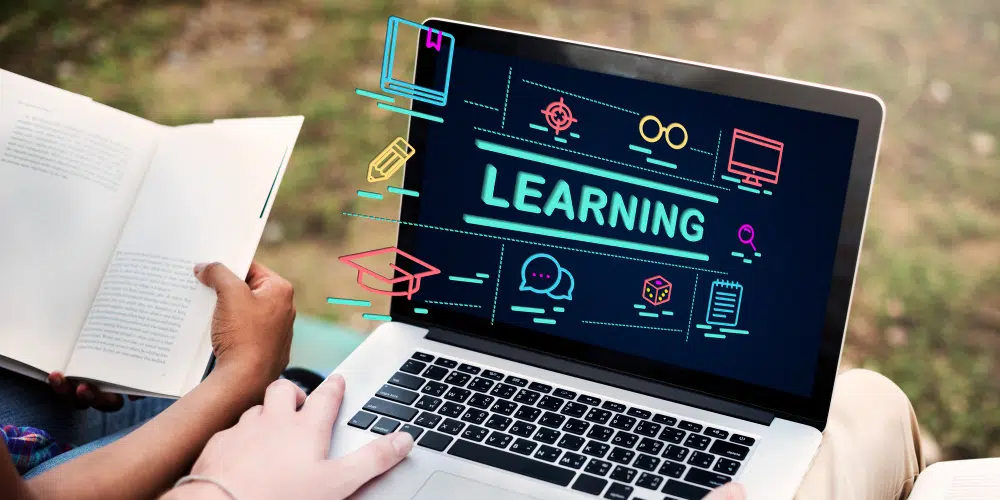
A tablet on a cluttered desk displays a virtual meeting with multiple participants, while two people in the foreground engage with the screen and take notes, suggesting collaborative online learning in a study environment.

Unlocking Opportunities with IT Distance Learning: Study IT Online with Belgium Campus iTversity

In today’s fast‑paced digital world, education is evolving as quickly as technology itself. One of the most significant shifts has been the rise of IT distance learning, a flexible and accessible way for students to gain valuable skills without being tied to a physical classroom. For aspiring IT professionals, this mode of study offers unparalleled opportunities to balance learning with life’s demands, while still receiving a world‑class education. Belgium Campus iTversity has embraced this transformation, offering students the chance to study IT online and prepare for a thriving career in the technology sector.

Unlocking Opportunities with IT Distance Learning: Study IT Online with Belgium Campus iTversity Read More »

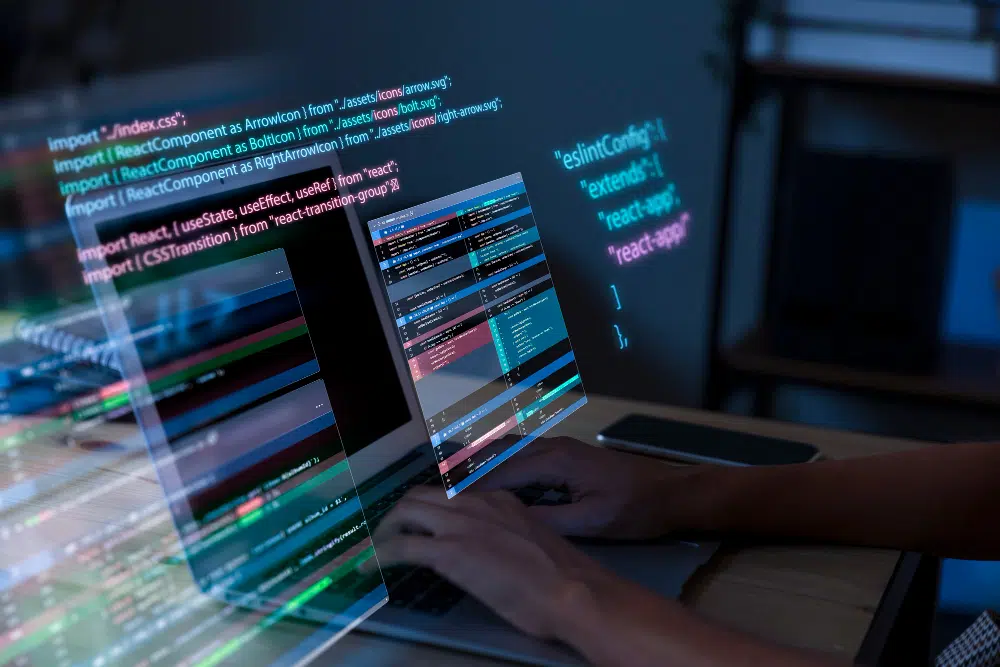
A person seated and working on a laptop, with HTML and JavaScript code visually projected around them, representing immersive web development and digital engagement.

Why Choosing an IT College is the Smartest Path to a Future in Technology

In today’s digital age, the demand for skilled IT professionals has never been greater. Technology drives innovation, efficiency, and growth across every industry, making Information Technology one of the most sought‑after career paths. For students eager to enter this dynamic field, enrolling in an IT College offers the perfect foundation.

Why Choosing an IT College is the Smartest Path to a Future in Technology Read More »

A scientist in a white lab coat, gloves, and goggles works at a computer in a modern laboratory. The screen displays a close-up of a DNA strand labeled "Double-stranded DNA" and a colorful flowchart. Nearby, test tubes are organized in racks, and a microscope sits on the bench, suggesting genetic or molecular biology research.

AI in Biomedical Engineering: Reprogramming Life with Code

The convergence of artificial intelligence (AI) in biomedical engineering is recoding the very fabric of the bio-digital frontier. From gene editing to AI-powered drug discovery, this fusion is enabling breakthroughs that were once the realm of science fiction.
As biology evolves into a code-driven discipline, IT professionals and researchers alike are stepping into a new era, where DNA is data and innovation is measured in both base pairs and bytes.

AI in Biomedical Engineering: Reprogramming Life with Code Read More »

A wearable tech interface is projected onto a person’s forearm, showing a video call with “Jane Smith” and biometric data like heart rate. The interface includes touch controls, a virtual keyboard, and futuristic icons, illustrating advanced augmented reality and health-monitoring capabilities.

Upgrading Humanity: The Rise of Human Augmentation Technology

As systems integrate with advanced technologies, Human Augmentation Technology is accelerating into mainstream application. From neural interfaces that decode thought to exoskeletons that amplify strength, we are entering an era where humanity’s potential is being redefined.

The boundaries of what we can do and who we are, are evolving.

Upgrading Humanity: The Rise of Human Augmentation Technology Read More »

Translate »