
Belgium Campus iTversity consortium set for Sasol Solar Challenge debut with SOL-1
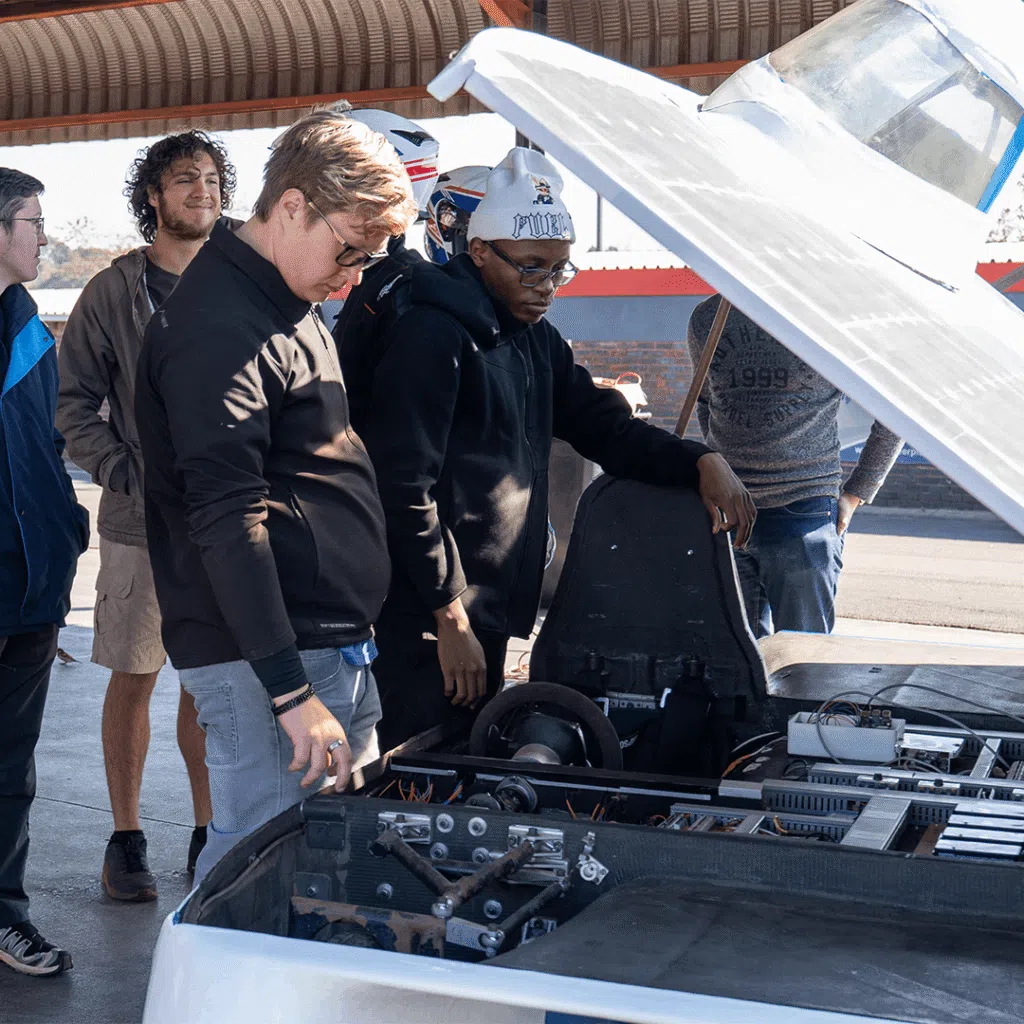
SOL INVICTUS Dynamics, a multidisciplinary consortium of students, academics, and industry mentors from Belgium Campus iTversity, CTU Training Solutions, IMM Graduate School, Open Window Institute and UXi Private Education, will make its competitive debut in the 2026 Sasol Solar Challenge with its solar-electric vehicle, SOL-1.
The team will travel more than 2,500 km over eight days from Sasolburg to Paarl as part of South Africa’s premier solar-powered endurance event. Competing in the Challenger Class, SOL INVICTUS Dynamics will join local and international teams in a competition where success is determined by the total distance covered through a combination of vehicle efficiency, energy management, and race strategy.
For the consortium, the challenge also presents an opportunity to engage with learners at schools across the country and demonstrate how technology, engineering and innovation are applied in a practical setting.
Competition and collaboration
Project Manager of SOL INVICTUS Dynamics and Project Lead: Internationalisation at Belgium Campus iTversity, François Venter, says the challenge provides students with an opportunity to apply their knowledge in a demanding real-world environment.
“The project brings together students from a range of disciplines and gives them practical experience in solving complex problems under real operating conditions,” says Venter.
The consortium combines expertise in intelligent computing, software development, engineering, marketing, business management, visual communication, and product design. Participating institutions contribute to various aspects of the project, from vehicle development and telemetry to branding, outreach and campaign coordination.
SOL-1 features a lightweight composite chassis, high-efficiency solar panels, an electric drivetrain, and advanced telemetry systems. Throughout the event, students will analyse vehicle and environmental data in real time to support decisions around energy use, vehicle performance, and race strategy.
Strategy on the road
Particular attention will be paid to the challenge’s Half-Blind and Full-Blind stages. During these sections of the route, teams must adapt to changing conditions while working with limited information, placing additional emphasis on planning, data analysis, and decision-making.
“The challenge rewards disciplined decision-making,” says Venter. “Teams need to evaluate information continuously, manage available energy and adapt to changing conditions while maintaining performance.”
The official route begins in Sasolburg before heading to Swartruggens on the opening day. The convoy then continues through Vryburg and Kimberley, where the competition’s Full-Blind stage will test real-time route analysis and race strategy. The western leg of the challenge takes competitors through Olifantshoek, Augrabies and Springbok, where optional loop opportunities can significantly increase total distance covered. The penultimate stage passes through Clanwilliam before the challenge concludes in Paarl.
Across the eight-day route, teams will contend with changing terrain, weather conditions, elevation shifts and strategic loop opportunities, all of which influence overall performance and distance covered.
Learning beyond the race
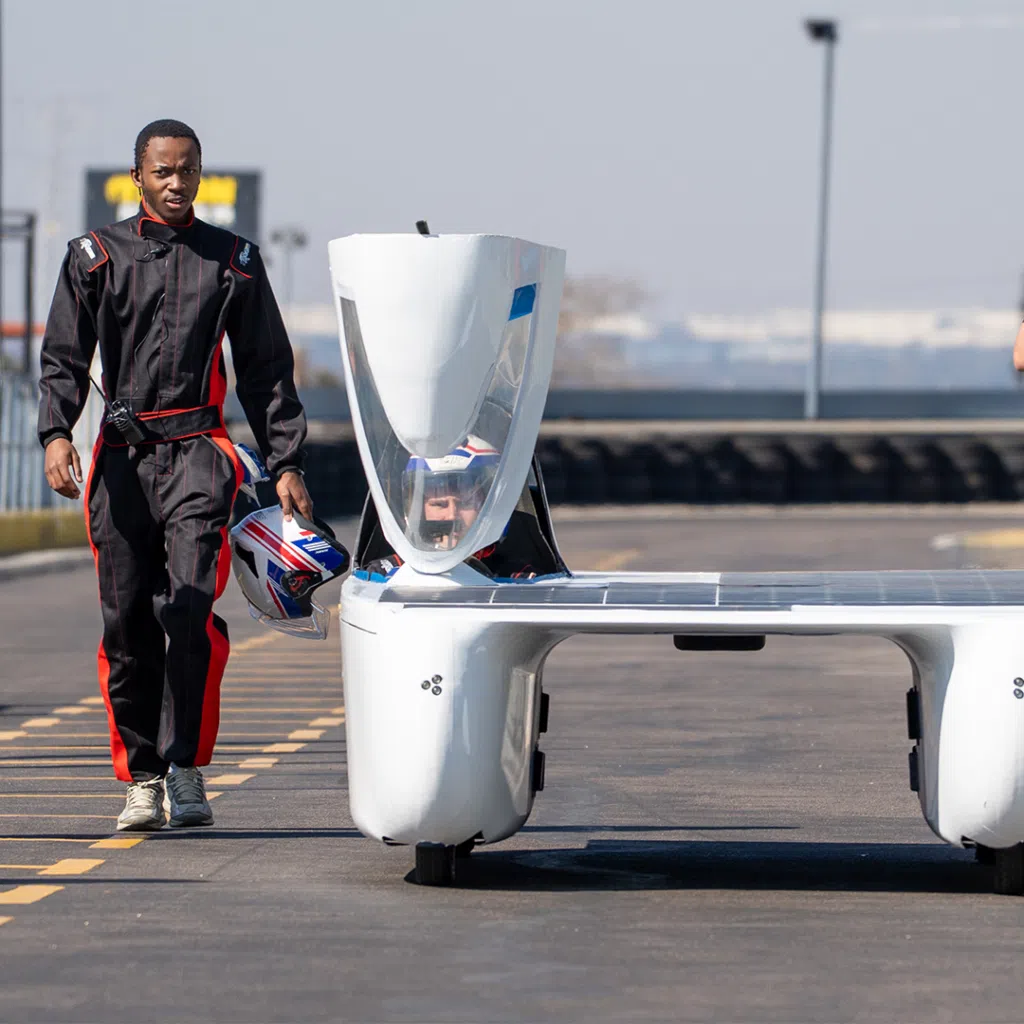
Control stops throughout the challenge will be hosted at Rustenburg High School, Zeerust High School, Kimberley Technical High School, Postmasburg High School, Upington High School, Namakwa High School, Vanrhynsdorp High School, and Charlie Hofmeyer High School in Ceres.
At each stop, learners will have an opportunity to view the vehicle, engage with team members, and gain insight into careers in software development, engineering, renewable energy, and related disciplines.
Venter says the outreach component forms an important part of the initiative. “Many learners will encounter this type of technology for the first time during the challenge. The control stops create opportunities for students to share their experiences and demonstrate how different skills come together in a project of this nature,” he says.
When SOL-1 reaches Paarl, the project will mark the culmination of a collaborative effort involving students, academics, and industry mentors from five institutions working towards a shared engineering challenge.
About Belgium Campus iTversity
Belgium Campus iTversity is a private higher-education institution specialising in Information and Communications Technology. Through accredited programmes, applied learning and industry collaboration, the institution prepares students for careers in software engineering, artificial intelligence, data science, cybersecurity, and related digital disciplines.
About SOL INVICTUS Dynamics
SOL INVICTUS Dynamics is a multi-institutional solar car team comprising students and staff from Belgium Campus iTversity, CTU Training Solutions, IMM Graduate School and Open Window. The team was established to provide students with practical experience in sustainable engineering and innovation while competing in the Sasol Solar Challenge 2026. Through collaboration, creativity and technical excellence, the team is committed to showcasing the power of multidisciplinary learning and renewable-energy innovation.
- Press release on behalf of Belgium Campus iTversity

By this year, attackers were using AI to scale and accelerate cyber crime, which extends from generating code and automating attacks, to crafting convincing phishing and deepfake scams. The AI Incident Database lists more than 7 000 incidents in which AI was used as a hacking tool.