
6 July 2026

Three students sit at desks in a library, each wearing a virtual‑reality headset and interacting with digital content in the air. Laptops are open in front of them, and bookshelves line the background, illustrating a modern, technology‑enhanced learning environment.

Why SA schools must embrace technology and active learning

Technology has long played a part in education. The chalkboard appeared in 1890, the pencil became widespread a decade later, followed by radio a century ago, the overhead projector in 1930 and the photocopier in the late 1960s. The computer arrived in the 1980s and mobile devices have since made it possible for learners to access content anytime, anywhere.
Covid-19 moved everything online almost overnight. Technologies that might have taken years to adopt became mainstream in months, normalising digital learning for teachers and students.
It was not a perfect system, as many children were left behind due to unequal access to technology, and the solutions implemented as part of lockdown were not systems that were designed to teach foundational skills remotely. But it challenged the production-line model of learning. Students had to manage their own schedules, learn independently, find information themselves and develop digital skills. And then most of them went back to sitting in rows.

Why SA schools must embrace technology and active learning Read More »
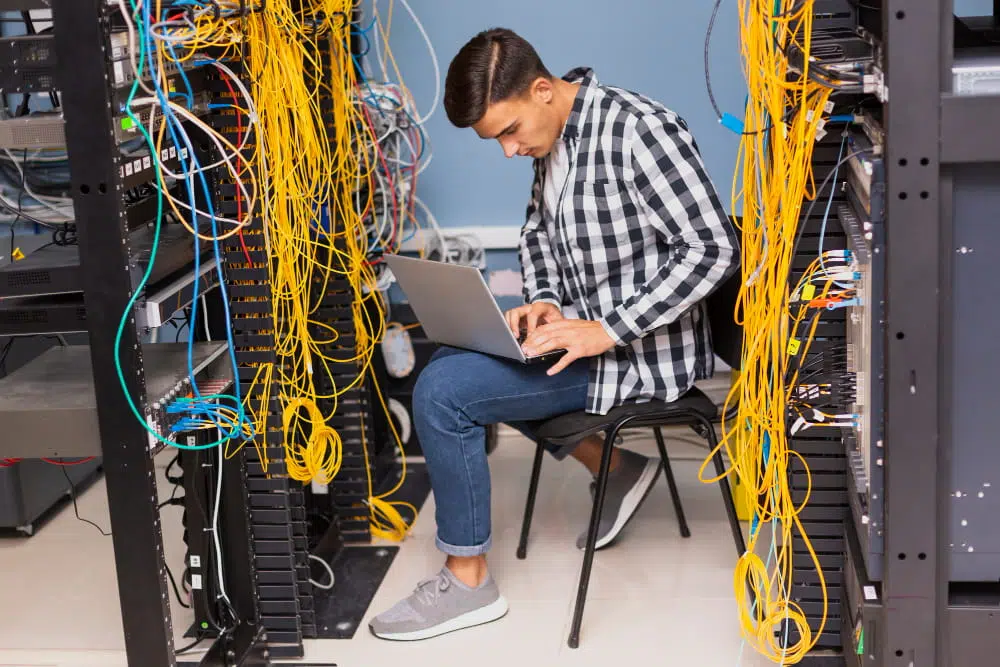
A person sits on a chair between two tall server racks filled with neatly organised yellow and blue network cables. They are wearing a checkered shirt, jeans, and grey shoes, and are working on a laptop. The scene takes place in a server room or data centre, highlighting hands‑on network maintenance and the complexity of modern digital infrastructure. Network engineering courses

Network Engineering Courses in South Africa: Building the Digital Systems That Keep the World Connected

Network engineering courses teach students how to design, secure, and maintain digital networks across cloud, wireless, and enterprise environments. These programmes build essential skills in routing, switching, cybersecurity, automation, and infrastructure management, preparing graduates for high demand roles in South Africa’s expanding digital ecosystem.

Network Engineering Courses in South Africa: Building the Digital Systems That Keep the World Connected Read More »

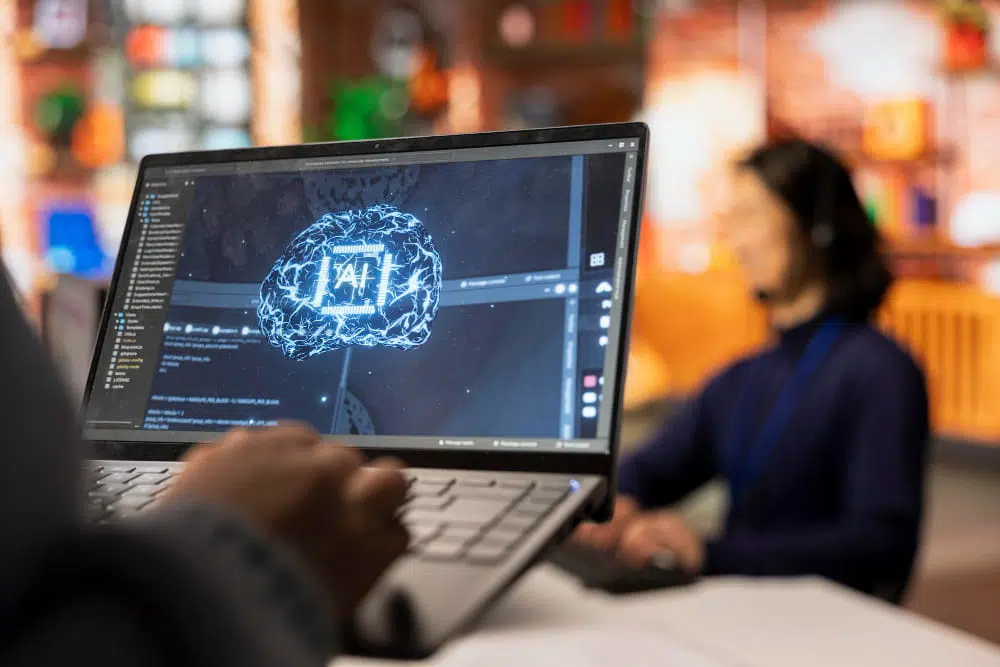
A close-up of a laptop screen displaying a digital illustration of a brain made of circuitry with the letters “AI” in the centre. Lines of programming code and a development interface appear in the background of the screen. Behind the laptop, a person wearing a headset sits in a warm, modern workspace with shelves and soft lighting. Generative AI

The Rise of Generative AI and What It Means for Students

The rise of Generative AI and what it means for students includes personalised learning, enhanced creativity, stronger digital literacy, improved research skills, and new opportunities in coding and emerging technologies. Generative AI helps students learn faster, think critically, collaborate digitally, and prepare for future careers shaped by AI driven innovation. Ethical awareness, digital safety, and adaptability are essential as AI becomes central to education across South Africa, Africa, and the global digital economy.

The Rise of Generative AI and What It Means for Students Read More »

Translate »