
Articles

In-depth articles about the latest IT trends and industry-related matters.

Computer displaying an AI-powered digital network with connected data nodes, illustrating machine learning, artificial intelligence and information technology systems.

Do You Need Maths to Study IT?

Choosing between Computer Science and Information Technology can be challenging because both fields offer exciting opportunities in the technology sector. While Computer Science focuses on programming, software development, algorithms, artificial intelligence, and creating modern technologies, Information Technology centres on implementing, managing, securing, and maintaining technology systems within organisations. Both qualifications develop valuable technical and problem-solving skills and can lead to high-demand careers in areas such as software development, cybersecurity, cloud computing, data science, and IT infrastructure. The best choice depends on whether a student is more interested in creating technology solutions or managing and optimising the systems that businesses rely on every day.

Do You Need Maths to Study IT? Read More »

Computer displaying an AI-powered digital network with connected data nodes, illustrating machine learning, artificial intelligence and information technology systems.

Computer Science versus Information Technology: What’s the Difference?

Choosing between Computer Science and Information Technology can be challenging because both fields offer exciting opportunities in the technology sector. While Computer Science focuses on programming, software development, algorithms, artificial intelligence, and creating modern technologies, Information Technology centres on implementing, managing, securing, and maintaining technology systems within organisations. Both qualifications develop valuable technical and problem-solving skills and can lead to high-demand careers in areas such as software development, cybersecurity, cloud computing, data science, and IT infrastructure. The best choice depends on whether a student is more interested in creating technology solutions or managing and optimising the systems that businesses rely on every day.

Computer Science versus Information Technology: What’s the Difference? Read More »

Human and AI robot face-to-face, illustrating the connection and differences between artificial intelligence, machine learning and human intelligence.

Artificial Intelligence versus Machine Learning: What’s the Difference?

Artificial intelligence (AI) and machine learning (ML) are closely related technologies, but they are not the same. AI is the broader field focused on creating systems that can perform tasks requiring human intelligence, while machine learning is a subset of AI that enables systems to learn from data and improve over time. This article explores the key differences between AI and ML, how each technology works, their real-world applications, and the growing career opportunities they are creating across industries. Understanding both fields is becoming increasingly important as organisations embrace intelligent technologies to drive innovation, efficiency, and digital transformation.

Artificial Intelligence versus Machine Learning: What’s the Difference? Read More »

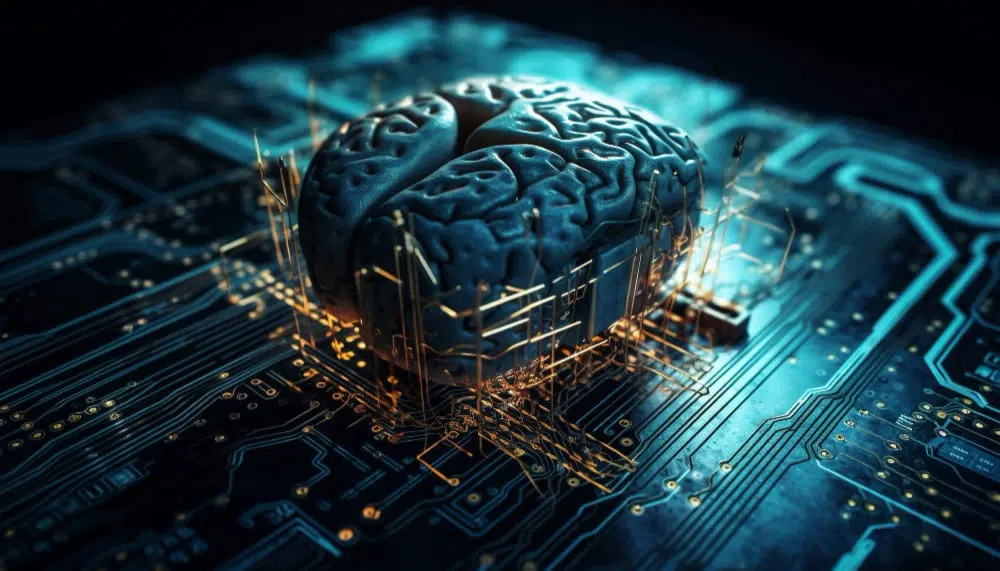
Digital brain on a circuit board representing artificial intelligence and machine learning technology.

What Is Machine Learning and How Does It Work?

Machine learning is a branch of artificial intelligence that enables computers to learn from data, identify patterns, and make predictions without being explicitly programmed for every task. The article explains how machine learning works through data collection, preparation, model training, testing, and deployment. It also explores the three main types of machine learning: supervised, unsupervised, and reinforcement learning. From healthcare and finance to cybersecurity and transport, machine learning powers many technologies used every day. As organisations increasingly rely on automation and data-driven decision-making, machine learning is becoming one of the most valuable and in-demand skills in the technology industry.

What Is Machine Learning and How Does It Work? Read More »

Blue digital circuit board design with glowing binary code and connected lines.

Coding Courses: What Should Beginners Look for Before Enrolling?

Coding courses teach beginners how to write instructions that computers can understand, but the best learning goes beyond syntax. Students should develop programming fundamentals, logical thinking, problem-solving, and practical skills that can help them adapt as technology and AI evolve. Before choosing a course, prospective students should consider the qualification, curriculum, practical learning opportunities, and broader IT knowledge they will gain.

Coding Courses: What Should Beginners Look for Before Enrolling? Read More »

Robotic hand and human hand reaching towards each other against a light grey background, symbolising collaboration between people and artificial intelligence.

Artificial Intelligence Course: What Should You Actually Learn in an AI-Driven World?

An artificial intelligence course should teach more than how to use AI tools. Students need to develop foundational knowledge in computing, data, problem-solving, software development and machine learning while understanding how artificial intelligence is applied in real-world environments. At Belgium Campus iTversity, AI-related skills form part of broader technology qualifications that help students develop both technical expertise and the ability to adapt as technology evolves.

Artificial Intelligence Course: What Should You Actually Learn in an AI-Driven World? Read More »

Hands typing on a computer keyboard, overlaid with digital screens displaying code, graphs, data and world maps, representing software development and data technology.

Software Development Course: What Should You Learn for the Future?

A software development course should teach more than how to write code. It should develop programming fundamentals, problem-solving, software design, testing, and practical development skills while helping students understand emerging technologies such as artificial intelligence. At Belgium Campus iTversity, Software Development forms part of the Bachelor of Information Technology and Diploma in Information Technology study pathways.

Software Development Course: What Should You Learn for the Future? Read More »

Programming course concept showing computer code on a digital screen being operated by touch

Programming Course in the Age of AI: What Should You Actually Learn?

A programming course should teach more than coding syntax. Students need to develop programming fundamentals, logical and computational thinking, problem-solving abilities and an understanding of how software is designed and developed. As AI becomes increasingly relevant to technology, programming education should help students develop the foundational knowledge needed to understand, evaluate and work with evolving digital tools. At Belgium Campus iTversity, programming forms part of broader IT qualifications and is available as a specialisation within the Diploma in Information Technology.

Programming Course in the Age of AI: What Should You Actually Learn? Read More »

“Person using a laptop in a blue-lit server room surrounded by computer equipment and illuminated server racks.”

Choosing an IT Degree in South Africa: Building Skills for More Than One Career

An IT degree can suit more than people who already know how to code. It can appeal to curious problem-solvers, analytical thinkers and people who want to use technology to create practical solutions. Choosing the right degree means considering your interests, how you like to solve problems and the areas of technology you would like to explore. Belgium Campus iTversity offers degree pathways including the Bachelor of Information Technology and Bachelor of Computing, with opportunities to study areas such as software development, software engineering, and data science.

Choosing an IT Degree in South Africa: Building Skills for More Than One Career Read More »

Overhead view of a collaborative office workspace where four people are gathered around a desk with laptops, computer monitors, documents, sticky notes, and a smartphone. One person is writing on a sticky note while another points towards materials on the desk, suggesting a team discussion or project planning session. A printed document labelled “Contract” is visible on the table.

7 High-Paying IT Careers Most Students Have Never Heard Of

Most students associate IT careers with software development or cybersecurity, but the technology industry offers many lesser-known opportunities. Emerging roles such as DevOps Engineer, Data Engineer, Cloud Security Specialist, Site Reliability Engineer, AI Operations Engineer, Automation Engineer, and Solutions Architect are becoming increasingly valuable as organisations invest in cloud computing, artificial intelligence, automation, and digital transformation. These careers combine technical expertise with problem-solving and strategic thinking, offering sturdy growth potential and excellent long-term prospects. For students considering a future in technology, exploring these hidden IT careers could open doors to exciting opportunities beyond traditional tech roles.

7 High-Paying IT Careers Most Students Have Never Heard Of Read More »

Translate »