
Do You Need Maths to Study IT?
At a Glance
Many prospective students worry that their mathematics marks may prevent them from pursuing a career in technology. The good news is that while maths plays a key role in Information Technology (IT), you do not need to be a mathematical expert to succeed. Different IT specialisations require various levels of mathematics, with fields such as data science, artificial intelligence, and machine learning relying more heavily on mathematical concepts than areas such as IT support, networking, and systems administration. Success in IT often depends more on logical thinking, problem-solving skills, curiosity, and a willingness to learn than advanced mathematical ability. Understanding how maths is used in technology can help students choose a study path that aligns with their interests and career goals.
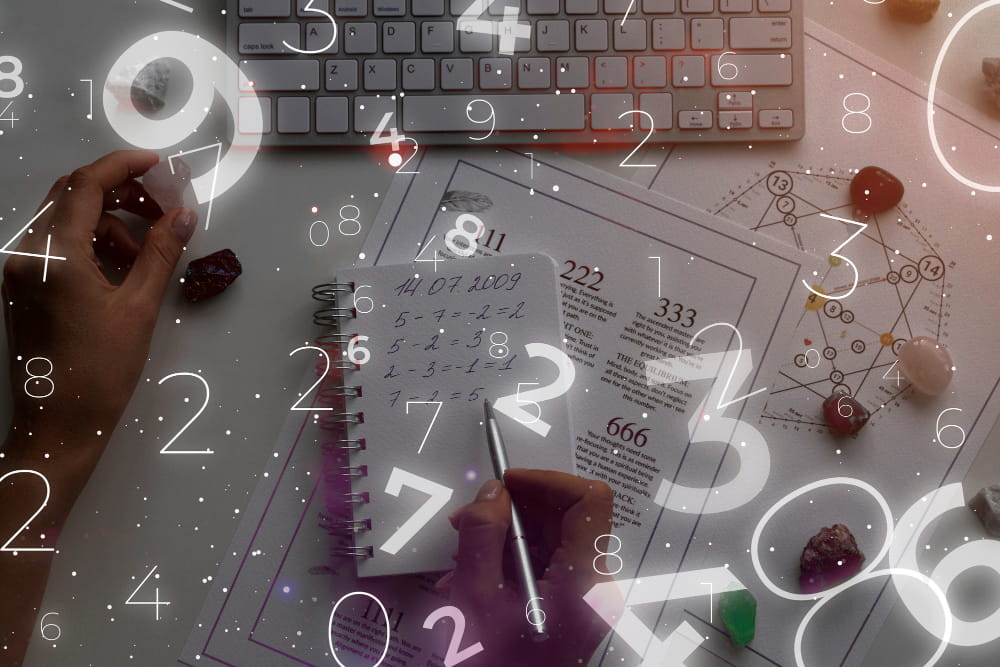
If you’re considering a career in technology, one question may be holding you back: Do You Need Maths to Study IT? It’s a common concern among prospective students, especially those who enjoy technology but do not see mathematics as their strongest subject.
The short answer is yes, mathematics can be an important part of studying Information Technology (IT), but the level and type of maths required often depend on the specific qualification, institution, and career path you choose. More importantly, you do not need to be a mathematical genius to succeed in IT.
In reality, many technology professionals use logical thinking, problem-solving, and analytical skills far more often than advanced mathematical formulas. Understanding how maths fits into IT can help you make an informed decision about your future studies.
Do You Need Maths to Study IT?
The question “Do You Need Maths to Study IT?” does not have a one-size-fits-all answer.
Most IT qualifications require some level of mathematical understanding because technology and computing are built on logical principles. However, not all technology disciplines rely heavily on advanced mathematics.
For example:
- Software development often uses mathematical thinking and logic.
- Data science relies heavily on statistics and data analysis.
- Cybersecurity uses mathematical concepts in encryption.
- Network administration typically requires less advanced maths.
- IT support roles focus more on troubleshooting and technical knowledge.
As a result, the amount of mathematics you encounter will depend on your chosen specialisation.
Why Is Maths Important in IT?
Mathematics helps technology professionals solve problems systematically and think logically.
While you may not spend every day solving complex equations, many areas of IT rely on mathematical concepts such as:
Problem-Solving
Programming and software development require breaking large challenges into smaller, manageable steps. This type of structured thinking is closely related to mathematical reasoning.
Algorithms
Algorithms are instructions that tell computers how to perform tasks. Many algorithms are based on mathematical logic and computational principles.
Data Analysis
Modern organisations collect enormous amounts of data. IT professionals working with analytics, machine learning, or artificial intelligence often use statistics and mathematical models to identify patterns and insights.
Cybersecurity
Encryption technologies that protect sensitive information often rely on mathematical principles to secure data from cyber threats.
What Types of Maths Are Used in IT?
When people ask, “Do You Need Maths to Study IT?”, they often imagine advanced calculus and complicated formulas. However, the maths used in IT is often more practical than many people expect.
Some common mathematical topics include:
Basic Mathematics
Most students use fundamental skills such as:
- Percentages.
- Ratios.
- Fractions.
- Graphs.
- Basic algebra.
These concepts support problem-solving and data interpretation.
Algebra
Algebra helps students understand programming logic, variables, and calculations commonly used in software development.
Statistics
Statistics are particularly important in data science, artificial intelligence, business intelligence, and machine learning.
Discrete Mathematics
This branch of mathematics focuses on logic, sets, sequences, and algorithms, making it highly relevant to computer science and programming.
Can You Study IT If You’re Not Good at Maths?
Yes. One of the biggest misconceptions about technology careers is that only maths specialists can succeed in the field.
Many successful IT professionals began their studies with average mathematics skills. What often matters more is a willingness to learn, strong problem-solving abilities, and an interest in technology.
Technology qualifications are designed to teach students the skills they need. As long as students are prepared to apply themselves and develop their understanding over time, mathematics does not have to be a barrier to entry.
Which IT Careers Require More Maths?
Some technology careers involve significantly more mathematics than others. Careers that typically require stronger mathematical skills include:
- Data Scientist.
- Machine Learning Engineer.
- Artificial Intelligence Specialist.
- Research Scientist.
- Quantitative Analyst.
- Computer Scientist.
These roles often involve statistical analysis, predictive modelling, and advanced algorithms.
Which IT Careers Require Less Maths?
Many technology careers rely more on technical expertise and problem-solving than on advanced mathematics.
Examples include:
- IT Support Specialist.
- Network Administrator.
- Systems Administrator.
- Cybersecurity Technician.
- Cloud Support Specialist.
- Database Administrator.
- IT Project Manager.
While basic mathematical understanding remains valuable, these careers do not involve intensive mathematical calculations on a daily basis.

Is Computer Science More Mathematical Than IT?
When discussing “Do You Need Maths to Study IT?”, it is useful to compare Information Technology with Computer Science.
Computer Science is more mathematical because it focuses on:
- Algorithms.
- Computational theory.
- Artificial intelligence.
- Software engineering.
- Data structures.
Information Technology focuses more on applying and managing technology systems, networks, infrastructure, and digital solutions.
As a result, students in Computer Science programmes often encounter more advanced mathematics than students in Information Technology programmes.
How Can Students Improve Their Maths Skills?
Students concerned about mathematics can take proactive steps before and during their studies. Helpful strategies include:
- Revising school mathematics concepts.
- Practising logical reasoning exercises.
- Using online learning platforms.
- Completing programming tutorials.
- Strengthening problem-solving skills.
- Seeking academic support when needed.
While mathematics contributes to these abilities, success in IT is not determined solely by marks in mathematics. The ability to approach challenges logically and persistently is often just as important.
The Future of IT and Mathematical Skills
As technologies such as artificial intelligence, machine learning, cloud computing, cybersecurity, and data analytics continue to evolve, mathematical literacy is becoming increasingly valuable.
However, technology careers are diverse. Some roles require advanced mathematical expertise, while others focus more on infrastructure management, user support, system administration, or business technology solutions.
This diversity means there are opportunities for individuals with a wide range of strengths and interests.
Maths Open The Door to IT
So, do you need maths to study IT? Yes, mathematics plays a key role in many areas of Information Technology, but you do not need exceptional maths skills to pursue a successful technology career. The level of mathematics required will depend on your qualification and chosen specialisation.
More importantly, curiosity, determination, problem-solving abilities, and a willingness to learn are often the qualities that drive long-term success in the technology industry. If you are passionate about technology, mathematics should be viewed as a tool to support your journey rather than a barrier preventing you from starting it.
Frequently Asked Questions about Needing Maths to Study IT
- Do you need maths to study IT?
Yes, most IT qualifications include some mathematics, but the required level varies depending on the course and specialisation. - Can I study IT if I am not good at maths?
Yes. Many successful IT professionals started with average maths skills and improved throughout their studies. - Why is maths used in IT?
Maths helps with logical thinking, problem-solving, programming, data analysis, and cybersecurity. - Which areas of IT require the most maths?
Data science, artificial intelligence, machine learning, and computer science typically require stronger mathematical skills. - Which IT careers require less maths?
Roles such as IT Support Specialist, Network Administrator, Systems Administrator, and IT Project Manager use less advanced maths. - Is programming mostly maths?
No. Programming relies more on logic and problem-solving, although some mathematical concepts are useful. - Is Computer Science more mathematical than Information Technology?
Yes. Computer Science usually includes more advanced mathematics, algorithms, and computational theory. - What maths topics are useful for IT?
Basic algebra, statistics, percentages, logic, and discrete mathematics are commonly used in technology-related fields. - Can I improve my maths skills while studying IT?
Yes. Most students continue developing their mathematical and analytical skills throughout their qualification. - Should maths stop me from studying IT?
No. If you are interested in technology and willing to learn, maths should be seen as a skill to develop rather than a barrier to entry.
- Phillip Crafford, Belgium Campus iTversity


Future‑Proof Skills for a Digital‑First World
By this year, attackers were using AI to scale and accelerate cyber crime, which extends from generating code and automating attacks, to crafting convincing phishing and deepfake scams. The AI Incident Database lists more than 7 000 incidents in which AI was used as a hacking tool.