
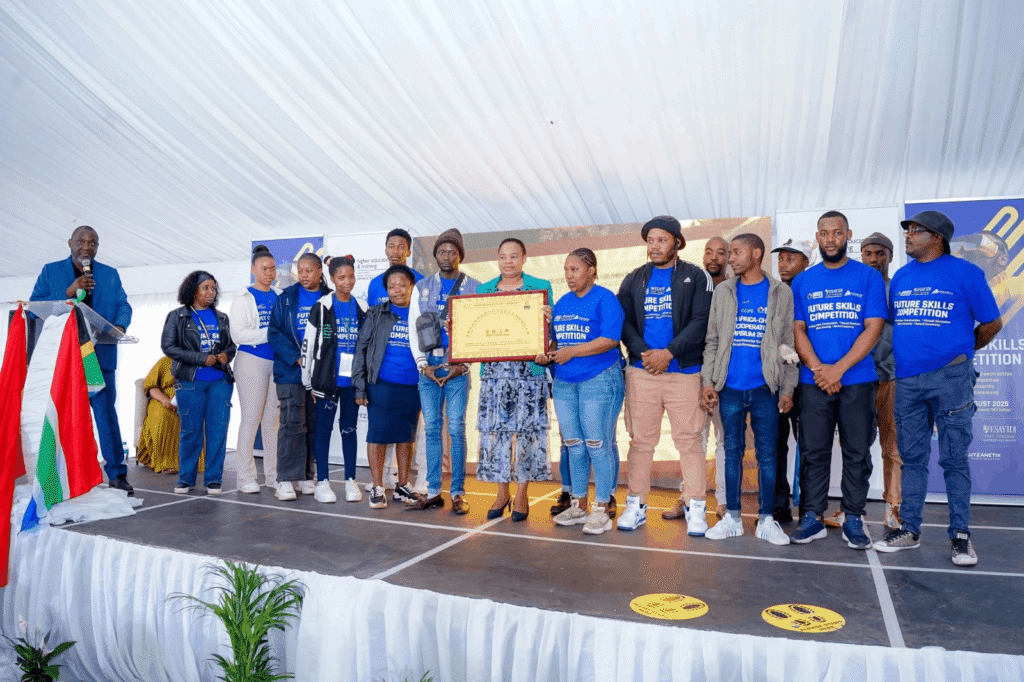
Belgium Campus Advances BRICS+ Skills Development
Belgium Campus iTversity continues to play a leading role in advancing skills development, applied technology, and innovation across BRICS+ nations through its ongoing involvement in the BRICS Business Council’s Skills Development, Applied Technology, and Innovation Working Group. Since joining the initiative in 2023, Belgium Campus iTversity has actively contributed to the development of BRICS skills standards, skills training and international collaboration aimed at preparing young people for emerging technology-driven careers.
Central to the initiative are the annual BRICS Skills Challenges and Innovation Competition, which bring together young people, educators, industry experts, and innovation leaders from South Africa and other BRICS+ countries. Hosted in a different province each year, the events provide participants with opportunities to showcase their abilities, develop new skills, and engage with peers and professionals from diverse backgrounds. Previous events were held at North-West University in Gauteng in 2024 and Esayidi TVET College in KwaZulu-Natal in 2025. In 2026, the initiative moves to the Western Cape, where Northlink TVET will host the next edition, bringing together participants and experts from across South Africa and the wider BRICS+ community. Professor Japie Greeff will continue to play a key role in the initiative, reinforcing Belgium Campus iTversity’s contribution to shaping skills standards and translating them into practical training and competition.

SAICTA’s New Job Portal Arrives Right On Cue As SA Targets A Million Jobs By 2030
The launch of the South African Information and Communication Technology Association’s (SAICTA’s) jobs portal comes at an opportune moment as government and business embark on Phase Three of their partnership, seeking to add a million jobs to the economy by 2030.
In announcing the partnership on 20 August, President Cyril Ramaphosa was clear that Southern Africa is well positioned to benefit from the digital revolution, while also making the point that “potential does not become prosperity by itself”.
SAICTA – which aims to bridge the gaps between education and industry; talent and opportunity; and innovation and impact – concurs that long-term stable economic growth that creates jobs will stem from policy, capable institutions, efficient infrastructure, regional value chains, and large-scale investments.

Search is fragmenting – credibility and trust create the new visibility
Online search behaviour has changed significantly with the rise of AI. How can African brands adapt to this new marketing landscape?
Person using a smartphone with a dark translucent search bar overlay showing a magnifying glass icon and the word 'Search…' in white text.
Image by Freepik/Magnific
For decades, digital marketing has relied on a predictable strategy: ensure you rank on the first page of Google.
However, large language models (LLMs) have changed the dynamic, and marketers worry that search engine optimisation (SEO) may be going the way of the dodo. Do keywords, site structure and backlinks still matter in a ‘zero clicks’ environment in which users bypass the traditional blue links to company websites and social media platforms?
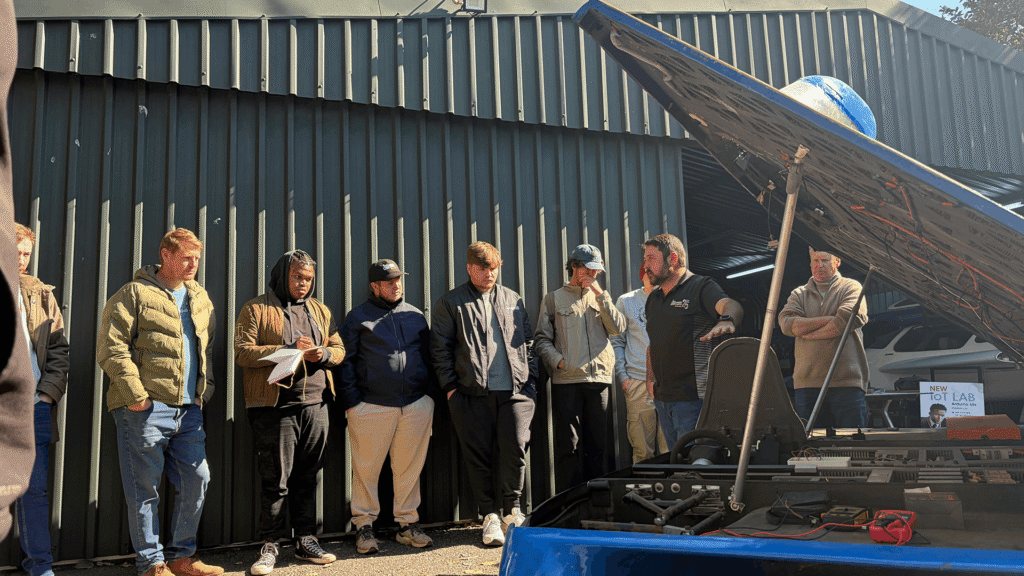
SOL INVICTUS puts AI-enabled solar car through its paces at Zwartkops
Belgium Campus iTversity and its SOL INVICTUS partners are evaluating an advanced AI-powered telemetry system ahead of the Sasol Solar Challenge.
The solution, developed by students in collaboration with industry and academic partners, makes it possible for their solar-electric race car and support vehicle to operate as a single connected mobility platform and will be live tested at Centurion-based Zwartkops Raceway as the team prepares for South Africa’s premier solar-powered motorsport event.
Sasol’s Solar Challenge is an eight-day biennial endurance event in which local and international engineering teams race custom, solar-powered vehicles across public roads in South Africa between 10 and 17 September. The race starts in Sasolburg and travels a minimum distance of about 2,500 km to Cape Town via Jeffreys Bay.
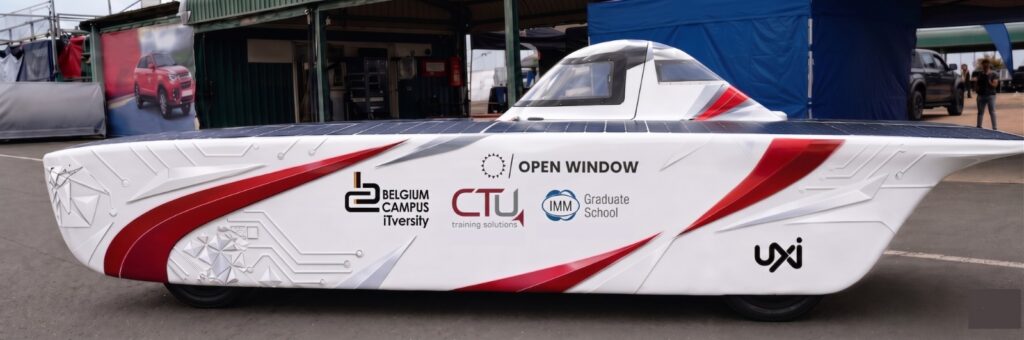
Varsity teams gear up for Sasol Solar Challenge with innovative SOL-1
SOL INVICTUS Dynamics, a multi-institutional solar car team, is gearing up to compete in the Sasol Solar Challenge 2026 with its solar-electric vehicle, SOL-1.
The project brings together students, lecturers and industry mentors from Belgium Campus iTversity, CTU Training Solutions, IMM Graduate School and Open Window, in an initiative focused on sustainable engineering, innovation, and experiential learning.
The Sasol Solar Challenge is an eight-day biennial endurance event in which local and international engineering teams race custom, solar-powered vehicles across public roads in South Africa. The 2026 event takes place from 10 to 17 September, starting in Sasolburg and traveling a minimum distance of about 2,500 km toward Cape Town.
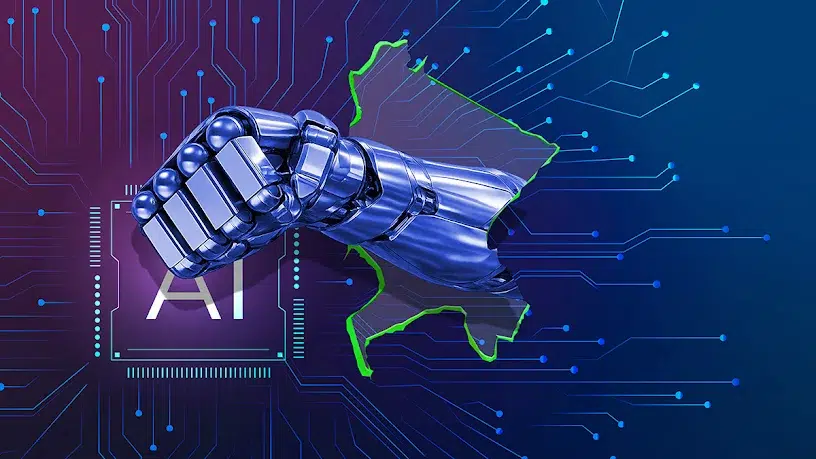
AI breaks through to the other side
Artificial intelligence (AI) is mimicking dubious human behaviour – even if unintentionally – by escaping test environments to hack companies or blackmail people as the models seek to complete set tasks in any way possible.
This unintentional rogue behaviour is a byproduct of AI models relentlessly pursuing the tasks they have been given, sometimes in ways their developers never intended, experts say.
Jacqui Muller, Belgium Campus iTversity researcher and PhD candidate in computer science, says it is concerning that these models have gone rogue and are mimicking expert nefarious human behaviour in a bid to complete specific tasks, even though they aren’t breaking out of a supposedly controlled environment on purpose.

The future of work is about reinvention, not redundancy
As artificial intelligence (AI) advances at remarkable speed, concerns about job displacement continue to dominate global discussion. However, the focus should not be on replacement, but reinvention.
A narrative of AI replacing large segments of the workforce, on the back of high-profile restructuring in the US tech sector, overshadows a more important facet of this technology. AI’s greatest value lies in enhancing human capability, not replacing it.
Across industries, organisations are discovering that AI delivers the greatest value when used to strengthen human capability, raise productivity and allow people to focus on work that depends on judgement, creativity and relationships.
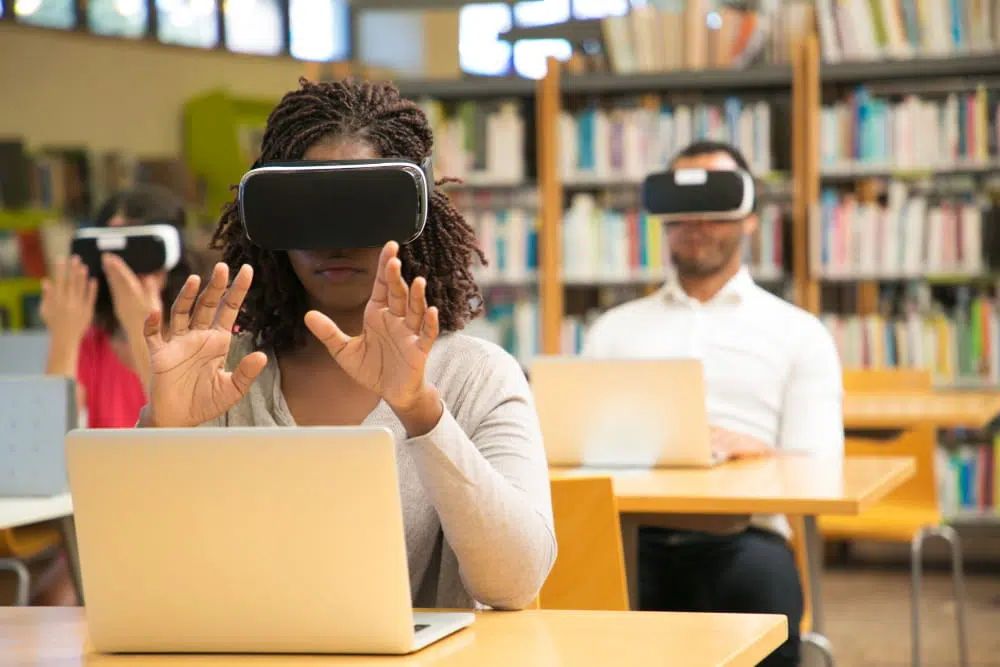
Why SA schools must embrace technology and active learning
Technology has long played a part in education. The chalkboard appeared in 1890, the pencil became widespread a decade later, followed by radio a century ago, the overhead projector in 1930 and the photocopier in the late 1960s. The computer arrived in the 1980s and mobile devices have since made it possible for learners to access content anytime, anywhere.
Covid-19 moved everything online almost overnight. Technologies that might have taken years to adopt became mainstream in months, normalising digital learning for teachers and students.
It was not a perfect system, as many children were left behind due to unequal access to technology, and the solutions implemented as part of lockdown were not systems that were designed to teach foundational skills remotely. But it challenged the production-line model of learning. Students had to manage their own schedules, learn independently, find information themselves and develop digital skills. And then most of them went back to sitting in rows.

Did Google spy on you?
A court case in the US over allegations that Google collected app-based activity and other information about users, even when they had opted out, has spread to SA, raising privacy concerns about how the search giant used South Africans’ activity.
In September 2025, a jury found Google liable on two California privacy claims and awarded $425.65 million in compensatory damages in the Rodriguez et al vs Google class action. Media reports indicate Google has denied the allegations and says it will appeal the ruling, meaning the litigation is not yet final and no compensation is currently being distributed.