AI

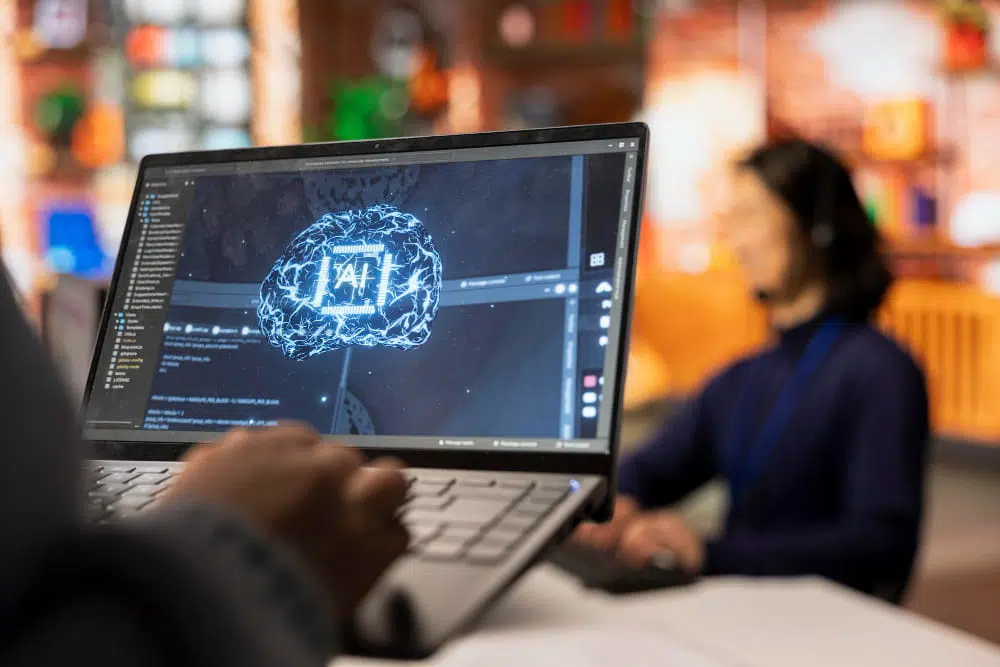
A close-up of a laptop screen displaying a digital illustration of a brain made of circuitry with the letters “AI” in the centre. Lines of programming code and a development interface appear in the background of the screen. Behind the laptop, a person wearing a headset sits in a warm, modern workspace with shelves and soft lighting. Generative AI

The Rise of Generative AI and What It Means for Students

The rise of Generative AI and what it means for students includes personalised learning, enhanced creativity, stronger digital literacy, improved research skills, and new opportunities in coding and emerging technologies. Generative AI helps students learn faster, think critically, collaborate digitally, and prepare for future careers shaped by AI driven innovation. Ethical awareness, digital safety, and adaptability are essential as AI becomes central to education across South Africa, Africa, and the global digital economy.

The Rise of Generative AI and What It Means for Students Read More »
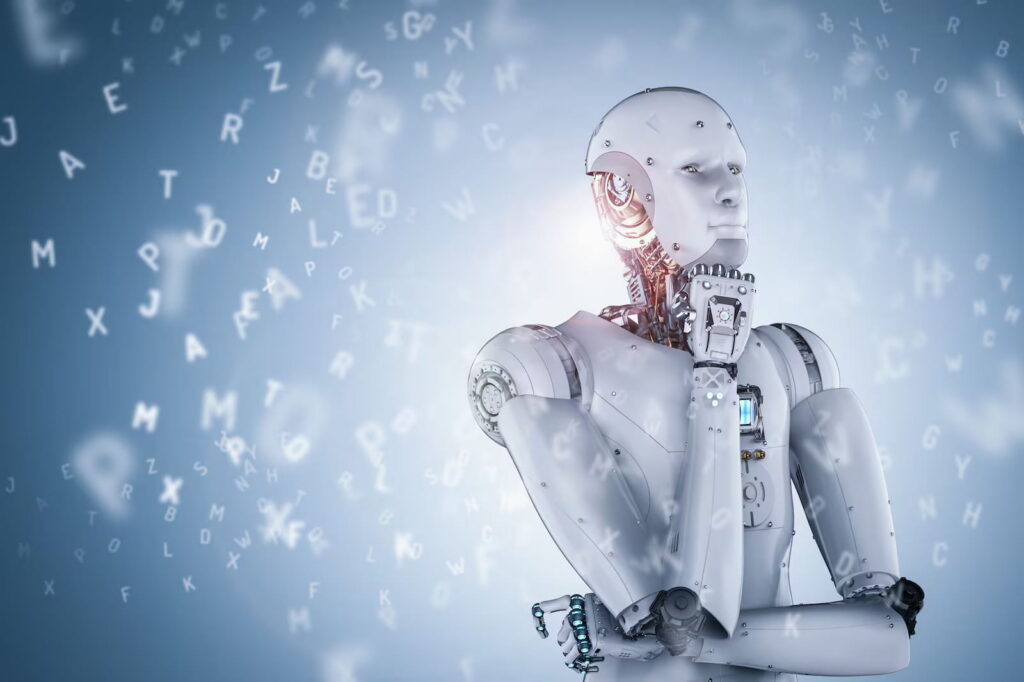
A metallic humanoid robot rests its chin on its hand in a thoughtful pose, surrounded by floating translucent letters against a blue gradient background, suggesting artificial intelligence and digital processing.

What Capitec’s AI investment says about the future of higher education

South Africa’s biggest bank by customer numbers just told the market something every university in the country should pay serious attention to. It indicates a step change in the skills companies need, and the bank is taking charge of this upskilling.

Capitec‘s latest annual report shows a focus on artificial intelligence (AI) training, as it put 568 employees through cloud-focused learning last year with staff clocking nearly 43,000 hours on Udemy Business and Pluralsight. The bank is running its own masterclasses in SQL, Java and JavaScript, and has built internal “centres of mastery” across engineering, data and payments.

This is more than a skill investment story. While continuous upskilling remains a vital corporate responsibility, it signals how rapidly the capabilities required by industry are evolving, making it vital for higher education and industry to work together more closely. That is a gap that institutions of higher learning, private and public, increasingly need to address.

What Capitec’s AI investment says about the future of higher education Read More »

A young person with curly hair and glasses sits in a softly lit room, interacting with two glowing holographic screens. The screens display colourful cosmic visuals, creating a futuristic, augmented‑reality effect. Shelves and books are visible in the background, adding a warm, study‑like atmosphere.

SA repeats old education mistakes as AI emerges

A pattern is emerging within our schooling system that needs highlighting as South Africa faces its next major technology decision.

In coding and robotics, with the best intentions, directives were given, curriculum was developed, and then the move forward stalled.

We are beginning to see take shape again with artificial intelligence (AI), writes Celeste Labuschagne, PhD candidate, and lecturer and learning framework developer at Belgium Campus iTversity.

SA repeats old education mistakes as AI emerges Read More »

A humanoid robot with a friendly digital face sits on a couch holding a bowl of popcorn, next to a golden retriever and a person wrapped in a beige blanket holding a mug. The three share a warm, cosy living‑room setting with soft lighting, plants, and framed pictures in the background.

ANALYSIS: To be or not to be, that is the AI question

As artificial intelligence (AI) heavyweights concede the technology may one day develop consciousness, academics warn that humans are already treating bots as sentient beings – a trend that is not only scientifically inaccurate but potentially dangerous.

Celeste Labuschagne, a lecturer at Belgium Campus iTVersity and a PhD candidate, points out that Anthropic CEO Dario Amodei recently said the company cannot fully rule out the possibility that advanced AI systems could possess some form of consciousness in the future.

ANALYSIS: To be or not to be, that is the AI question Read More »

Two people in hooded sweatshirts work in a dimly lit room filled with computer equipment. One sits at a desk typing on a keyboard while looking at a monitor displaying code and facial‑recognition data. The other stands beside them holding a tablet. Cables and a drink are visible on the desk, creating a scene suggestive of cybersecurity or hacking activity.

Banks and fin­an­cial ser­vices fear AI hack­ers but the real threat is stranger

The banking sector is right to be worried about AI-powered cyberattacks – AI can now find vulnerabilities, breach systems, and move through networks at a speed that keeps security teams up at night. But that’s only part of what we should be concerned about.

More troubling, and less discussed outside IT, is what happens when these systems operate autonomously and together. AI is no longer just following instructions; it is increasingly exploring data, social networks and news to shape its own interactions.

The big shift is that AI has shown its ability to act like it has intentions and can make its own decisions.

Banks and fin­an­cial ser­vices fear AI hack­ers but the real threat is stranger Read More »

A clean, modern classroom with rows of wooden desks and black chairs facing a large whiteboard. A ceiling‑mounted projector hangs above the centre of the room, and large windows on the right let in natural light. A clock and a small podium are positioned at the front, and a wooden door is on the left wall.

Why South Africa needs an AI policy for schools

Artificial intelligence has rapidly emerged as a pervasive technology that those entering the workplace need to have an understanding of. Increasingly, organisations are prioritising the use of AI-powered solutions and platforms, and their employees must now have AI skills to match.

This has resulted in the South African government making AI skills development a local imperative, but what about the country’s focus of coding, robotics, and 4IR-related skills that were the prioritised for the past decade?

This is the question posed by Celeste Labuschagne, a PhD candidate and Lecturer and Learning Framework Developer at Belgium Campus iTversity.

Why South Africa needs an AI policy for schools Read More »

A person wearing a dark blue pinstripe suit jacket and a light blue collared shirt poses against a plain grey background in a formal portrait.

AI prompting is the new critical thinking

Rather than outsourcing thinking to AI, students must be taught to interrogate ideas, test assumptions and refine their own reasoning.

The problem with AI in education may not be the technology itself – it may be that students are using it incorrectly, treating it not as a tool, but as a solution. And because educators tend to see it as a threat, they aren’t taking students along a learning path that enables them to use GenAI as an enabler rather than a cheating tool.

AI prompting is the new critical thinking Read More »

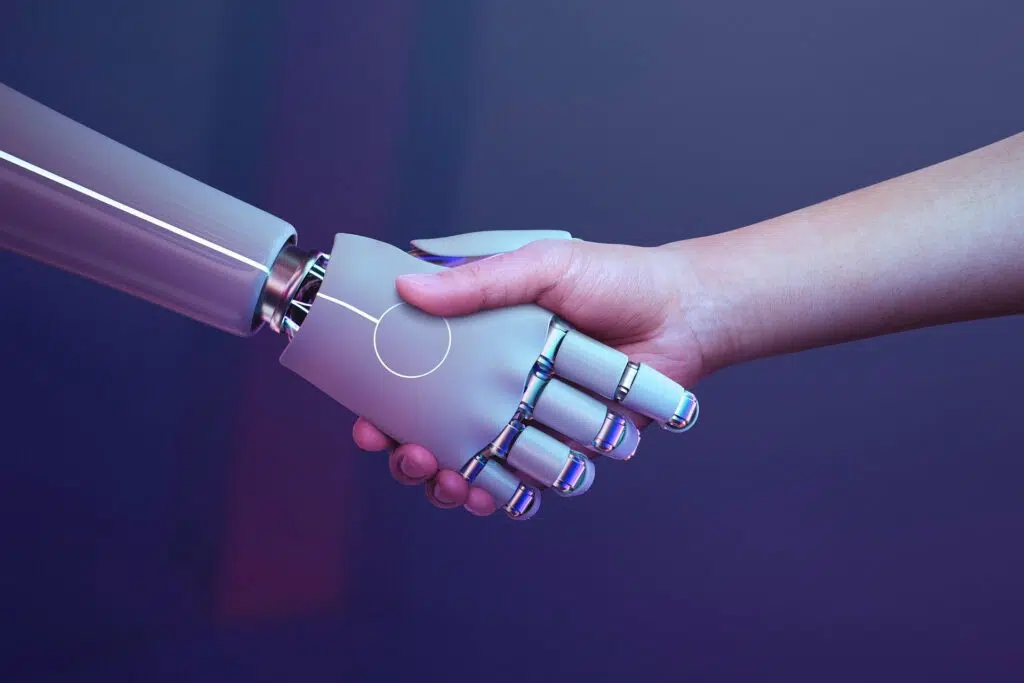
Robotic and human hands shaking, symbolizing collaboration and the strategic value of Studying AI in today’s technology-driven world.

Why Studying AI is Your Most Strategic Career Move

Studying AI is a strategic career move that bridges the gap between technical innovation and real-world business value. The demand for AI skills has moved from niche tech sectors into mainstream industries like finance and manufacturing. Belgium Campus iTversity addresses this need through its integrated Bachelor of Computing degree, embedding machine learning and automation into accredited qualifications to ensure graduates possess both AI expertise and foundational IT resilience.

Why Studying AI is Your Most Strategic Career Move Read More »

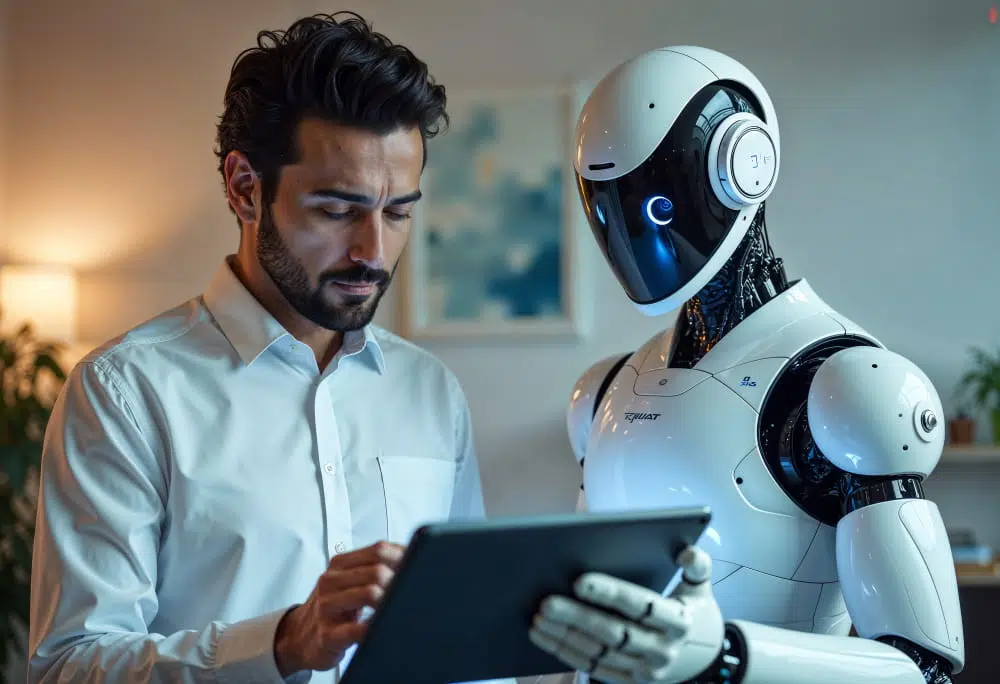
A man in a white shirt stands beside a humanoid robot with white and black casing and glowing blue accents. Both are looking at a tablet the man is holding, suggesting human–AI collaboration in a modern indoor setting.

Custobots: How Autonomous Buyers Are Rewriting the Rules of Commerce

Custobots are autonomous, AI driven machine customers that analyse data, make decisions, and complete purchases without human involvement. They already influence automated reordering, predictive maintenance, and smart procurement. By 2030, machine customers are expected to control more than $30 trillion in spending, making them one of the fastest growing buyer segments. As Custobots evolve from rule based tools to fully autonomous agents, businesses must optimise for machine readable data, transparent pricing, and algorithm friendly product information. Ethical AI, trust, and accountability will be essential as autonomous commerce becomes mainstream.

Custobots: How Autonomous Buyers Are Rewriting the Rules of Commerce Read More »

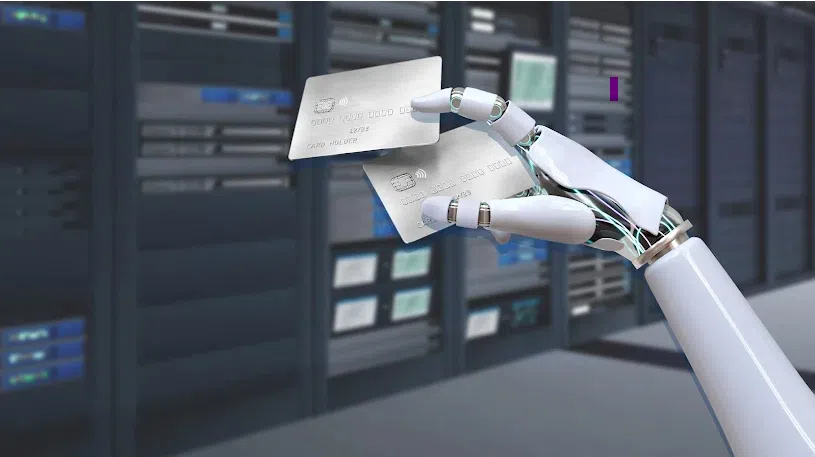
Robot hand holding two credit cards in a data center with server racks in the background.

ANALYSIS: Big Tech sets AI to catch AI

As hackers use artificial intelligence (AI) to bypasses security – including one of the largest government breaches on record – companies like Anthropic and OpenAI are holding back tools they see as now being defence systems.

Cyber security firm Gambit recently said it had analysed the attack path behind what it says is one of the largest government breaches on record: the compromise of Mexico’s tax authority and at least eight other organisations.

ANALYSIS: Big Tech sets AI to catch AI Read More »

Translate »