IT Education

“Person using a laptop in a blue-lit server room surrounded by computer equipment and illuminated server racks.”

Choosing an IT Degree in South Africa: Building Skills for More Than One Career

An IT degree can suit more than people who already know how to code. It can appeal to curious problem-solvers, analytical thinkers and people who want to use technology to create practical solutions. Choosing the right degree means considering your interests, how you like to solve problems and the areas of technology you would like to explore. Belgium Campus iTversity offers degree pathways including the Bachelor of Information Technology and Bachelor of Computing, with opportunities to study areas such as software development, software engineering, and data science.

Choosing an IT Degree in South Africa: Building Skills for More Than One Career Read More »

Cybersecurity concept showing a glowing digital globe with security lock icons inside a server room, symbolising network security, data protection, cyber defence and global information security.

From Ethical Hacking to Risk Management: How to Choose the Right Cybersecurity Course in South Africa

A cybersecurity course can prepare students to protect the systems, software, networks and data modern organisations depend on, but cybersecurity extends well beyond ethical hacking. The field includes network and cloud security, secure software development, vulnerability assessment, incident response, governance, risk and compliance. In South Africa, demand for specialised cybersecurity skills is significant, with a 2024 CSIR survey reporting that 63% of surveyed cybersecurity positions were partially or fully unfilled. For prospective students, the right pathway depends on their existing IT knowledge, preferred type of work and longer-term career ambitions. Belgium Campus iTversity offers several routes into the field, from a dedicated Security specialisation in its Diploma in Information Technology to advanced technical, risk-management and research pathways.

From Ethical Hacking to Risk Management: How to Choose the Right Cybersecurity Course in South Africa Read More »

A person in a white shirt interacts with a large transparent digital display filled with data science visuals, including bar charts, line graphs, and numerical metrics in blue and red tones. The futuristic interface appears to float in front of them, suggesting advanced analytics and real‑time data insights. Another person is visible in the background of the modern office setting, reinforcing a collaborative, tech‑driven work environment.

Data Science Courses in South Africa for the AI Driven World

South Africa is undergoing a powerful digital transformation. Every sector – finance, healthcare, retail, logistics, education, and public services – increasingly relies on data to operate, innovate, and compete. Organisations are collecting more information than ever before, and they urgently need professionals who can analyse it, interpret it, and turn it into meaningful insights. Data science courses in South Africa, including those offered at Belgium Campus iTversity, have become one of the most impactful pathways into high growth, future focused careers.

Data Science Courses in South Africa for the AI Driven World Read More »

Three students sit at desks in a library, each wearing a virtual‑reality headset and interacting with digital content in the air. Laptops are open in front of them, and bookshelves line the background, illustrating a modern, technology‑enhanced learning environment.

Why SA schools must embrace technology and active learning

Technology has long played a part in education. The chalkboard appeared in 1890, the pencil became widespread a decade later, followed by radio a century ago, the overhead projector in 1930 and the photocopier in the late 1960s. The computer arrived in the 1980s and mobile devices have since made it possible for learners to access content anytime, anywhere.
Covid-19 moved everything online almost overnight. Technologies that might have taken years to adopt became mainstream in months, normalising digital learning for teachers and students.
It was not a perfect system, as many children were left behind due to unequal access to technology, and the solutions implemented as part of lockdown were not systems that were designed to teach foundational skills remotely. But it challenged the production-line model of learning. Students had to manage their own schedules, learn independently, find information themselves and develop digital skills. And then most of them went back to sitting in rows.

Why SA schools must embrace technology and active learning Read More »

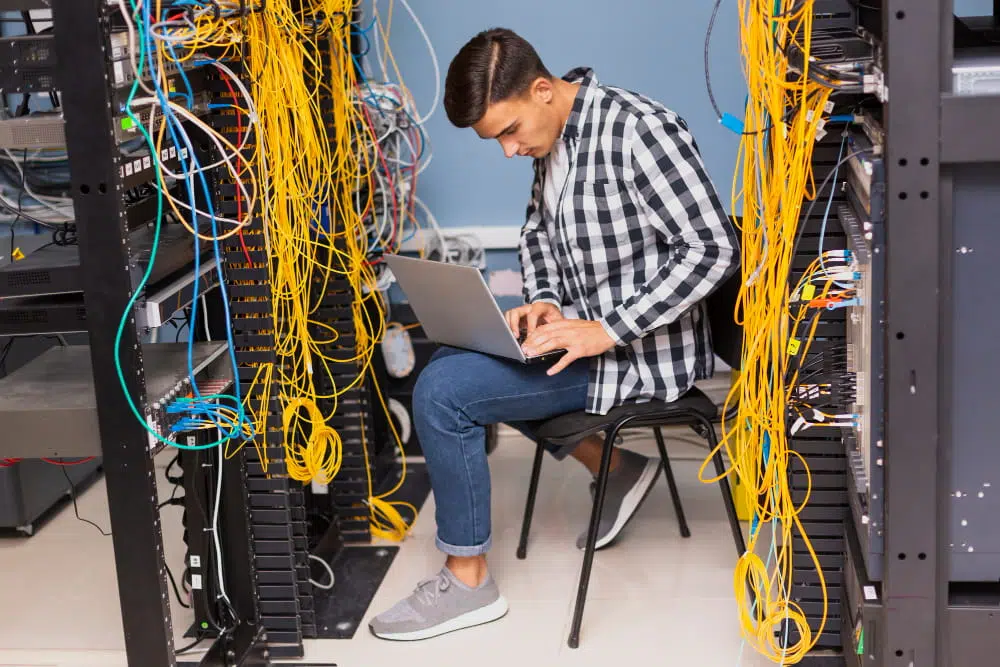
A person sits on a chair between two tall server racks filled with neatly organised yellow and blue network cables. They are wearing a checkered shirt, jeans, and grey shoes, and are working on a laptop. The scene takes place in a server room or data centre, highlighting hands‑on network maintenance and the complexity of modern digital infrastructure. Network engineering courses

Network Engineering Courses in South Africa: Building the Digital Systems That Keep the World Connected

Network engineering courses teach students how to design, secure, and maintain digital networks across cloud, wireless, and enterprise environments. These programmes build essential skills in routing, switching, cybersecurity, automation, and infrastructure management, preparing graduates for high demand roles in South Africa’s expanding digital ecosystem.

Network Engineering Courses in South Africa: Building the Digital Systems That Keep the World Connected Read More »

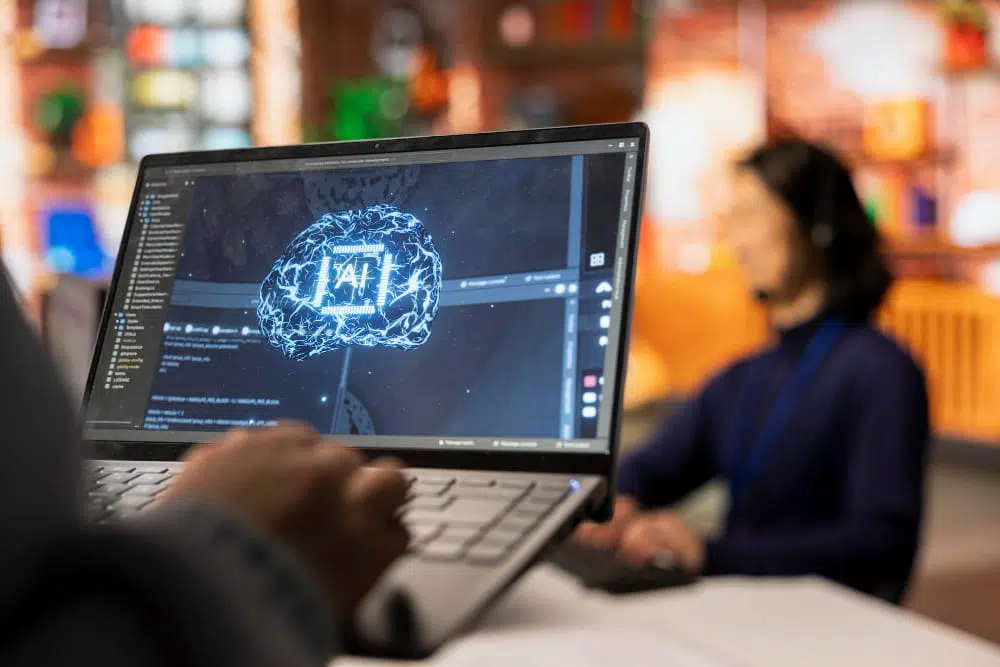
A close-up of a laptop screen displaying a digital illustration of a brain made of circuitry with the letters “AI” in the centre. Lines of programming code and a development interface appear in the background of the screen. Behind the laptop, a person wearing a headset sits in a warm, modern workspace with shelves and soft lighting. Generative AI

The Rise of Generative AI and What It Means for Students

The rise of Generative AI and what it means for students includes personalised learning, enhanced creativity, stronger digital literacy, improved research skills, and new opportunities in coding and emerging technologies. Generative AI helps students learn faster, think critically, collaborate digitally, and prepare for future careers shaped by AI driven innovation. Ethical awareness, digital safety, and adaptability are essential as AI becomes central to education across South Africa, Africa, and the global digital economy.

The Rise of Generative AI and What It Means for Students Read More »

A person seated and working on a laptop, with HTML and JavaScript code visually projected around them, representing immersive web development and digital engagement.

Why Choosing an IT College is the Smartest Path to a Future in Technology

In today’s digital age, the demand for skilled IT professionals has never been greater. Technology drives innovation, efficiency, and growth across every industry, making Information Technology one of the most sought‑after career paths. For students eager to enter this dynamic field, enrolling in an IT College offers the perfect foundation.

Why Choosing an IT College is the Smartest Path to a Future in Technology Read More »

Exploring a Software Engineering Course as an IT Gateway to a Career of Opportunities

Adding a Software Engineering Course to your IT studies can open up a world of career possibilities for you as an IT professional. Whether you’re interested in designing secure applications, enhancing user experiences, or building intelligent systems, a Software Engineering Course can provide the necessary skills and knowledge to accomplish this. 

Exploring a Software Engineering Course as an IT Gateway to a Career of Opportunities Read More »

Translate »