
IT

Person using a tablet alongside a humanoid robot in a modern indoor workspace. The robot is holding the device while both are positioned in front of the screen, illustrating collaboration between humans and artificial intelligence. The scene is softly lit with a blurred office or home office background.

What Are AI Agents and Why Are They Changing the Future of Work?

AI agents are intelligent software systems that can make decisions, perform tasks, learn from information, and interact with digital tools with minimal human intervention. Unlike traditional AI systems that respond to individual prompts, AI agents can plan, act, adapt, and complete multi-step tasks independently. As organisations increasingly adopt artificial intelligence to improve productivity, automate processes, and support decision-making, AI agents are emerging as one of the most important technology trends. Understanding what AI agents are, how they work, and the career opportunities they create is becoming essential for students preparing to enter the future digital economy.

What Are AI Agents and Why Are They Changing the Future of Work? Read More »

Illustration of Johannesburg's electricity network with an orange-toned background, featuring smart electricity meters, a lightning bolt across the image, the City Power Johannesburg logo, and a black silhouette of the Johannesburg skyline in the foreground. The image symbolises electricity supply, power infrastructure, energy monitoring, and urban power distribution.

City Power’s electricity theft crackdown faces data problem

City Power’s R3.96 billion in non-technical electricity losses is the target of a tender for near-real-time monitoring of prepaid purchases, but experts warn analytics will flag suspects, not recover money.

According to City Power’s latest annual report, the 2024/25 figure was up from R3.45 billion the previous year. It accounted for 20.85% of electricity purchased and included theft, illegal connections, meter bypassing, faulty equipment and billing errors.

Jacqui Muller, a researcher at Belgium Campus iTversity and a PhD candidate in computer science and information technology, warns that the proposed monitoring capabilities depend on the type of electricity meters installed.

“Standard prepaid meters are essentially one-way. You see the token sale, not the consumption,” Muller says. Near-real-time monitoring needs smart meters with reliable communications, a system that can take in interval readings, and clean links between the vending, billing, meter and GIS systems, she adds.

City Power’s electricity theft crackdown faces data problem Read More »

Person coding on a computer with binary data displayed on screen, representing software development, computer science, programming and information technology careers.

Do You Need Maths to Study IT?

Many prospective students worry that their mathematics marks may prevent them from pursuing a career in technology. The good news is that while maths plays a key role in Information Technology (IT), you do not need to be a mathematical expert to succeed. Different IT specialisations require various levels of mathematics, with fields such as data science, artificial intelligence, and machine learning relying more heavily on mathematical concepts than areas such as IT support, networking, and systems administration. Success in IT often depends more on logical thinking, problem-solving skills, curiosity, and a willingness to learn than advanced mathematical ability. Understanding how maths is used in technology can help students choose a study path that aligns with their interests and career goals.

Do You Need Maths to Study IT? Read More »

Computer displaying an AI-powered digital network with connected data nodes, illustrating machine learning, artificial intelligence and information technology systems.

Computer Science versus Information Technology: What’s the Difference?

Choosing between Computer Science and Information Technology can be challenging because both fields offer exciting opportunities in the technology sector. While Computer Science focuses on programming, software development, algorithms, artificial intelligence, and creating modern technologies, Information Technology centres on implementing, managing, securing, and maintaining technology systems within organisations. Both qualifications develop valuable technical and problem-solving skills and can lead to high-demand careers in areas such as software development, cybersecurity, cloud computing, data science, and IT infrastructure. The best choice depends on whether a student is more interested in creating technology solutions or managing and optimising the systems that businesses rely on every day.

Computer Science versus Information Technology: What’s the Difference? Read More »

Human and AI robot face-to-face, illustrating the connection and differences between artificial intelligence, machine learning and human intelligence.

Artificial Intelligence versus Machine Learning: What’s the Difference?

Artificial intelligence (AI) and machine learning (ML) are closely related technologies, but they are not the same. AI is the broader field focused on creating systems that can perform tasks requiring human intelligence, while machine learning is a subset of AI that enables systems to learn from data and improve over time. This article explores the key differences between AI and ML, how each technology works, their real-world applications, and the growing career opportunities they are creating across industries. Understanding both fields is becoming increasingly important as organisations embrace intelligent technologies to drive innovation, efficiency, and digital transformation.

Artificial Intelligence versus Machine Learning: What’s the Difference? Read More »

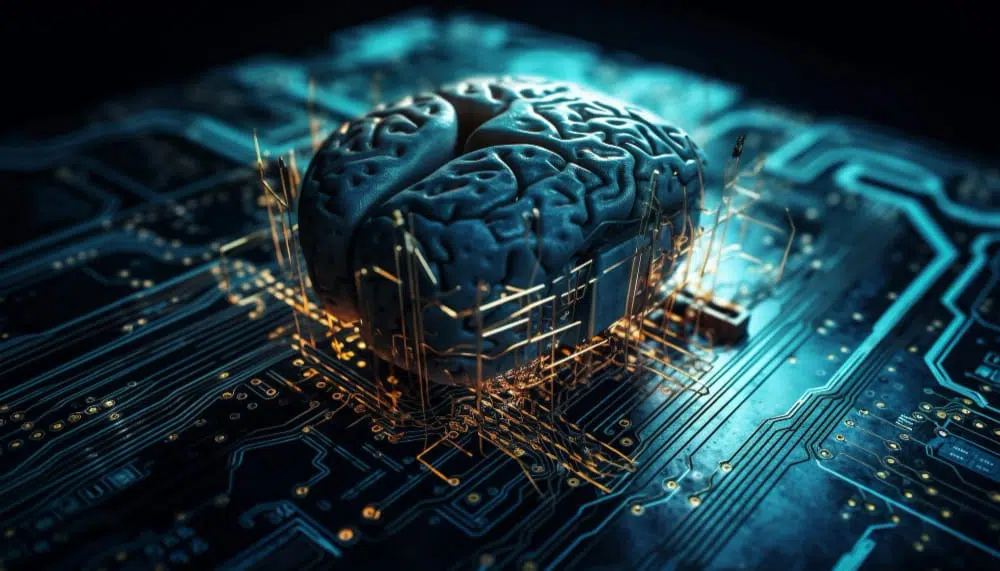
Digital brain on a circuit board representing artificial intelligence and machine learning technology.

What Is Machine Learning and How Does It Work?

Machine learning is a branch of artificial intelligence that enables computers to learn from data, identify patterns, and make predictions without being explicitly programmed for every task. The article explains how machine learning works through data collection, preparation, model training, testing, and deployment. It also explores the three main types of machine learning: supervised, unsupervised, and reinforcement learning. From healthcare and finance to cybersecurity and transport, machine learning powers many technologies used every day. As organisations increasingly rely on automation and data-driven decision-making, machine learning is becoming one of the most valuable and in-demand skills in the technology industry.

What Is Machine Learning and How Does It Work? Read More »

Blue digital circuit board design with glowing binary code and connected lines.

Coding Courses: What Should Beginners Look for Before Enrolling?

Coding courses teach beginners how to write instructions that computers can understand, but the best learning goes beyond syntax. Students should develop programming fundamentals, logical thinking, problem-solving, and practical skills that can help them adapt as technology and AI evolve. Before choosing a course, prospective students should consider the qualification, curriculum, practical learning opportunities, and broader IT knowledge they will gain.

Coding Courses: What Should Beginners Look for Before Enrolling? Read More »

Locked out of classroom, locked out of tech

Only three schools for South Africa’s Deaf learners teach maths, writes Edward van Niekerk, vocational programme coordinator at Belgium Campus iTversity.

Children as young as 13 must make subject choices that can shape what they study later and, ultimately, the careers open to them. It’s a big decision for such young learners, who may well change their minds multiple times before finishing school.

For Deaf learners, that decision is substantially more difficult because not every school offers the subject they wish to study, which can cut them off from several career choices.

This has a broader impact because Deaf learners may be cut off from fields desperately short of skills, including artificial intelligence, cyber security and software development.

Locked out of classroom, locked out of tech Read More »

Two green humanoid robots pulling a pink rope behind prison bars in a grey cell, with blue sky visible through a small window.

Rogue AI agents spark calls for jail time

As increasingly autonomous AI systems begin causing real-world problems, companies are racing to put safeguards in place amid calls for tougher regulation – and even jail time.

The Vienna Agentic Incidents Database has recorded 30 incidents involving autonomous AI agents, including unauthorised file and database deletions, cyber intrusions, financial transactions and agents interfering with shutdown controls, since 2022.

Rogue AI agents spark calls for jail time Read More »

Cybersecurity concept showing a glowing digital globe with security lock icons inside a server room, symbolising network security, data protection, cyber defence and global information security.

From Ethical Hacking to Risk Management: How to Choose the Right Cybersecurity Course in South Africa

A cybersecurity course can prepare students to protect the systems, software, networks and data modern organisations depend on, but cybersecurity extends well beyond ethical hacking. The field includes network and cloud security, secure software development, vulnerability assessment, incident response, governance, risk and compliance. In South Africa, demand for specialised cybersecurity skills is significant, with a 2024 CSIR survey reporting that 63% of surveyed cybersecurity positions were partially or fully unfilled. For prospective students, the right pathway depends on their existing IT knowledge, preferred type of work and longer-term career ambitions. Belgium Campus iTversity offers several routes into the field, from a dedicated Security specialisation in its Diploma in Information Technology to advanced technical, risk-management and research pathways.

From Ethical Hacking to Risk Management: How to Choose the Right Cybersecurity Course in South Africa Read More »

Translate »