
IT

Portrait of a person with short white hair and black-framed glasses, seated indoors against a light textured wall. The person is wearing a dark collared shirt with a colorful patterned panel on one shoulder and is facing the camera. Soft indoor lighting illuminates the scene, and part of a light-colored cushion is visible in the background.

SAICTA targets ICT jobs gap with new portal

The South African Information and Communication Technology Association (SAICTA) has introduced a new jobs portal aimed at connecting ICT professionals and graduates with employers.

Called Industry Connect, the portal is intended to go beyond traditional online job boards by linking employers, jobseekers and professional development in a single platform.

The portal is targeted at ICT jobseekers and ICT professionals, including graduates and people with existing ICT skills, while also serving employers looking to recruit ICT talent.

SAICTA CEO Dr Jannie Zaaiman says the initiative addresses one of the practical barriers to job creation: the disconnect between people with ICT skills and businesses that need them.

SAICTA targets ICT jobs gap with new portal Read More »

Person using an interactive digital technology interface with holographic-style data visualisations displayed on a transparent screen. The blue and purple illuminated dashboard shows charts, icons, analytics elements, and a scales-of-justice symbol, suggesting technology, data analysis, cybersecurity, artificial intelligence, or digital governance. The scene is set in a modern, low-light environment with futuristic visual effects and Belgium Campus brand-inspired purple graphic accents along the right edge of the image.

SAICTA’s New Job Portal Arrives Right On Cue As SA Targets A Million Jobs By 2030

The launch of the South African Information and Communication Technology Association’s (SAICTA’s) jobs portal comes at an opportune moment as government and business embark on Phase Three of their partnership, seeking to add a million jobs to the economy by 2030.

In announcing the partnership on 20 August, President Cyril Ramaphosa was clear that Southern Africa is well positioned to benefit from the digital revolution, while also making the point that “potential does not become prosperity by itself”.

SAICTA – which aims to bridge the gaps between education and industry; talent and opportunity; and innovation and impact – concurs that long-term stable economic growth that creates jobs will stem from policy, capable institutions, efficient infrastructure, regional value chains, and large-scale investments.

SAICTA’s New Job Portal Arrives Right On Cue As SA Targets A Million Jobs By 2030 Read More »

A large 3D Google “G” logo in red, yellow, green and blue holds a magnifying glass, symbolising online search. Behind it, blurred webpage text suggests search results or information being examined.

Did Google spy on you?

A court case in the US over allegations that Google collected app-based activity and other information about users, even when they had opted out, has spread to SA, raising privacy concerns about how the search giant used South Africans’ activity.

In September 2025, a jury found Google liable on two California privacy claims and awarded $425.65 million in compensatory damages in the Rodriguez et al vs Google class action. Media reports indicate Google has denied the allegations and says it will appeal the ruling, meaning the litigation is not yet final and no compensation is currently being distributed.

Did Google spy on you? Read More »

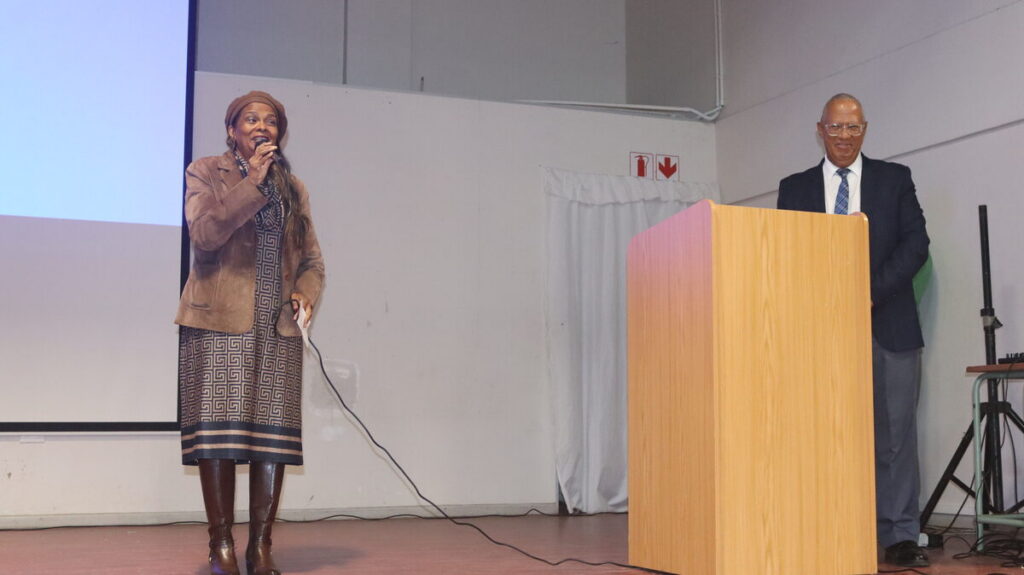
A woman speaks into a microphone on stage while another person stands at a podium beside her in a formal presentation setting, with a projection screen and exit sign behind them.

Local Grade 7 learners get a chance to look to the future

Grade 7 learners at primary schools in Macassar and Somerset West were introduced to a wide range of careers and skills-based opportunities last week as their schools hosted back-to-back career days.

On Wednesday 27 May Firgrove Primary School hosted neighbouring Oklahoma Street and St Paul’s primary schools for a joint Life Orientation Club Expo.

Local Grade 7 learners get a chance to look to the future Read More »

A classroom-style computer lab with several students working at desktop computers. Three people sit at a curved desk using laptops and monitors, while another person stands nearby offering assistance. Rows of computer stations fill the bright, modern room, creating a focused learning environment.

The Importance of Practical, Industry Aligned IT Education

The article explains the importance of practical, industry aligned IT education in preparing South African students for a rapidly evolving digital economy. It highlights how hands on learning, real world experience, and strong industry partnerships improve employability, credibility, and workplace readiness. It also outlines the ICT skills employers need in 2026 and shows why practical, industry aligned training is essential for South Africa’s economic growth and digital competitiveness.

The Importance of Practical, Industry Aligned IT Education Read More »

Two people sit together at a desk in a modern office, analysing data on multiple computer monitors. The screens display colourful bar graphs, pie charts, line graphs, and numerical tables. One person points at a chart while the other types on a keyboard. Large digital displays in the background show additional financial or analytical data, creating a high‑tech, collaborative workspace atmosphere.

ICT’s Role in South Africa’s Economy: Why Digital Skills Matter More Than Ever

ICT’s role in South Africa’s economy is growing rapidly, driven by major investments in digital infrastructure, cloud computing, e commerce, and digital skills development. South Africa’s digital economy contributes up to 19% of GDP, and institutions like Belgium Campus iTversity play a key role in preparing skilled ICT professionals to support national growth.

ICT’s Role in South Africa’s Economy: Why Digital Skills Matter More Than Ever Read More »

Robotic and human hands shaking, symbolizing collaboration and the strategic value of Studying AI in today’s technology-driven world.

Why Studying AI is Your Most Strategic Career Move

Studying AI is a strategic career move that bridges the gap between technical innovation and real-world business value. The demand for AI skills has moved from niche tech sectors into mainstream industries like finance and manufacturing. Belgium Campus iTversity addresses this need through its integrated Bachelor of Computing degree, embedding machine learning and automation into accredited qualifications to ensure graduates possess both AI expertise and foundational IT resilience.

Why Studying AI is Your Most Strategic Career Move Read More »

A person sits at a desk working on a laptop displaying lines of HTML and JavaScript code, including React script references. The scene focuses on the screen and hands typing, highlighting software development work.

Why Information Technology Courses Are Essential for South Africa’s Digital Future

Information technology courses teach students how to design, manage, and support digital systems. Belgium Campus iTversity offers industry aligned IT qualifications through both on campus and online study options, preparing graduates for high demand roles in South Africa’s growing digital economy.

Why Information Technology Courses Are Essential for South Africa’s Digital Future Read More »

A person in a white lab coat stands in a high‑tech workspace, facing multiple computer monitors. The screens display complex digital graphics, including a glowing blue brain diagram and a network flowchart. The individual has headphones around their neck, suggesting technical or research work in an advanced computing or AI environment.

Why Systems Thinking Is Now the Most Important Skill for Software Developers in the Age of AI

Systems thinking is becoming the most essential skill for software developers as AI increasingly automates coding tasks. While AI tools can generate code, fix bugs, and streamline development, they cannot replace a human’s ability to understand how complex systems behave and interact. Developers who can design, interpret, and manage entire systems will thrive in an AI driven software landscape. Coding is becoming automated, but systems thinking is becoming indispensable.

Why Systems Thinking Is Now the Most Important Skill for Software Developers in the Age of AI Read More »

Translate »