General News

September Exam Results

September Exam Results We would like to congratulate our students for their continued hard work and dedication. They achieved an overall qualification rate of 86% and an overall pass rate of 87% for the past September examinations. Our Tshwane campus wrote a total of 1305 exams and received a 90% pass rate with 483 distinctions achieved. Our Ekurhuleni campus wrote a total of 414 exams and received an 80% pass rate with 127 distinctions achieved. Our Nelson Mandela Bay campus wrote a total of 105 exams and received a 92% pass rate with 50 distinctions achieved. Exam reviews will take place on the 1st and the 8th of November 2019. If you would like to have your results reviewed by a senior lecturer, please apply through your Canvas portal before the 25th of October 2019. We have entered the fourth and final quarter of the year and the finish line is well within site. We encourage our students to continue working hard and we have no doubt that they will continue to excel, after all, that’s just the way we’re wired.

September Exam Results Read More »

BCMusketeers Participate in WRC Symposium Hackathon

BCMusketeers Participate in WRC Symposium Hackathon Belgium Campus iTversity students, Otshepeng Mashele and Ronald Qobolo, teamed up with Expotech Industries Founder, Joël Tiogo, to participate in the WRC Symposium Hackathon last month. Students were tasked to come up with innovative technological solutions to the water and sanitation challenges facing the African continent. According to UN-Water, “Half of the people who drink water from unsafe sources live in Africa. In Sub-Saharan Africa alone, only 24% of the population have access to safe drinking water.” The 36-hour hackathon, hosted by Geekulcha, took place on the 11th and 12th of September at the Sandton Convention Centre. 30 young techies with backgrounds in computer science, programming and engineering took part, innovating for a common cause. Our students, along with Tiogo (under the team name BCMusketeers), came up with an IoT solution termed Breaking Barriers aimed at decreasing water wastage while improving service delivery by bridging the communication gap between the government and the community. “During our research we found that many consumers are unable to report or get updates regarding the water issues in their area, so we came up with a system to solve this,” Qobolo commented. “In South Africa, 37% of the country’s water gets wasted through leakages and bridging which is why this project is so important to us,” Tiogo added. The system uses sensors to detect irregular water flow in pipes, updates the relevant government about the issue so that action can be taken and integrates with an instant messaging system that informs residents of the affected location. “The hope is that the system will provide the municipality with more accurate data and a better understanding of the common water related problems in the community, as well as deepen customer trust by providing them with readily accessible, accurate information at any time and from anywhere,” Qobolo commented. “It was an amazing networking and learning opportunity! I can’t thank Geekulcha and HERE Technologies enough for hosting and mentoring us, as well as Belgium Campus for ensuring that we arrived at the venue safely,” said Mashele, who received some awesome HERE Technologies merchandise and was named Best Female Star for helping to bridge the gender gap through her contribution to technology. Tap to select the previous period Next

BCMusketeers Participate in WRC Symposium Hackathon Read More »

Heritage Day Through the Eyes of Belgium Campus Students

Heritage Day Through the Eyes of Belgium Campus Students “I think it is important for us to celebrate Heritage Day because it is a way of giving honour and respect to each and everyone’s culture and their different traditional beliefs. Belgium Campus has people of different races, backgrounds and cultures and having such a diverse community means everyone is allowed to be themselves and feel accepted. I am from the Democratic Republic of Congo and to celebrate my culture I wear my traditional clothing called pagne. I also enjoy traditional food with my family. We eat pap and pondu (kasava leaves) as well as bingovu (sweet potatoes) and lamb,” says Nkolo Mukeza-Yves, a 2nd year Bachelor of Computing student. “I see Heritage Day as a celebration of the diversity and different cultures within our country. My family and I celebrate Heritage Day by coming together to have a braai. It is a time for us to share the food we enjoy, while also enjoying each other’s company,” Tennille Hardy, a 2nd year Bachelor of Computing student shares. “As human beings we share many traits but we also have an array of differences. To many people this can be very scary but I believe that the celebration of our differences can convey our respect and willingness to understand one another. To me, Heritage Day is an incredible occasion during which our cultures shine bright and the philosophies we treasure are displayed. I believe Belgium Campus is a culturally diverse institution because of the spectra that is the student body and the members of faculty. The benefits of this diversity are many but most importantly it prepares us for a future of open mindedness and acceptance. As an Indian, I like to celebrate my heritage by indulging in our traditional cuisine and celebrating cultural events like Diwali with my family. I enjoy treats like soji (a sweet delicacy) and savoury dishes like mutton curry and roti. Two of my favourite pastimes are listening to Indian music and watching Bollywood movies,” shares Aaron Krishna, a 2nd year Bachelor of Computing student. “I think issues like the xenophobic violence that has been taking place in South Africa are caused by a lack of understanding of each other’s cultures. Heritage Day is important because it makes people aware of the different cultures out there and it helps people develop an appreciation for cultures outside of their own. It is the perfect time for people to ask questions about each other’s traditions and through these conversations we may realise we are a lot more similar than we are different. I was born in Australia, my dad is originally from Zimbabwe and my mom is from the Eastern Cape. In my culture your heritage comes from your father, so I consider myself to be Zimbabwean but I love that I have been exposed to and been able to experience a number of different cultures,” comments Haniel Maponga, a 1st year Diploma in Information Technology student. “Heritage Day unites people from different cultures and walks of life. I feel it is important to celebrate our different heritages and show appreciation for them because anything that you don’t appreciate you’ll eventually lose and what a shame this would be. Although I grew up in South Africa, I am originally from the Democratic Republic of Congo and this culture is embedded in me, it makes me who I am today. My family and I celebrate our heritage by eating a lot of our cultural foods like le frète, matembele and le bitoyo,” shares Samuel Kalubi, a 2nd year Bachelor of Computing student. “Celebrating our heritages is important because it helps keep them alive for the future generations. Being at an institution like Belgium Campus, where everyone comes from different places, we are exposed to a number of different cultural perspectives which broaden our understanding of the world and help us grow as individuals,” 2nd year Diploma in Information Technology student, Mutale Mwananshiku, says.

Heritage Day Through the Eyes of Belgium Campus Students Read More »

Belgium Campus iTversity: A Cultural Melting Pot

Belgium Campus iTversity: A Cultural Melting Pot There are thousands of different cultures all over the world. South Africa has one of the most diverse with 11 official languages and 8 other recognised languages. “I think we are fortunate to be able to celebrate Heritage Day in South Africa as it gives us an opportunity to recognise our rich cultural heritage and the vibrancy that comes with it,” comments Thinus Kritzinger, Administrative Dean. Belgium Campus iTversity’s heritage reflects the richness and diversity of the country it is found in. Not only do we have students from a range of different South African cultures, we also have students from a number of different countries including Belgium, Bulgaria, Congo, Mozambique, Zaire, Zimbabwe, Zambia and Swaziland. “An education is not just about knowledge, it is about developing professional, multicultural attitudes and skills, and I think this extremely important for the complete development of a person during their education and beyond,” comments CEO, Enrico Jacobs. “At Belgium Campus we encourage our students to celebrate their heritage and we believe that doing so promotes cultural awareness and diversity of thought, which in turn leads to inclusivity and innovation,” Kritzinger adds. Like any other institution Belgium Campus has its own unique traditions, practices and beliefs that define campus culture and set us apart from other institutions. “Belgium Campus was built around the notion of family and we try to instil the values of integrity, respect and good work-ethic in all our students,” Kritzinger comments. “Respect is of the utmost importance. We teach our students to respect each person regardless of their beliefs or their background. At the end of the day we are all working towards the same goal, namely building a future,” adds Mr. Jacobs. The founders of Belgium Campus iTversity, Mr. Jacobs and Mr. Rombouts, are both Belgian. As such, it is not surprising that they would bring some of their Belgian heritage to the campus. This is reflected not only in the campus name but also in the tradition of opening the academic year. “The academic opening allows us to come together as students, alumni, academia, industry and government, to celebrate knowledge and the way in which it can be used to benefit society. It is a tradition we value and a tradition that we have practiced since Belgium Campus’ inception,” Mr. Jacobs shares. “Something else that sets us apart is that all our students wear uniform. We feel that this creates a sense of unity and ensures that everyone feels like part of the Belgium Campus family,” Kritzinger adds. Read what some of our students had to say when they reflected on their own heritage as well as the diversity on campus: Heritage Day Through the Eyes of Belgium Campus Students

Belgium Campus iTversity: A Cultural Melting Pot Read More »

DEAF Careers 365

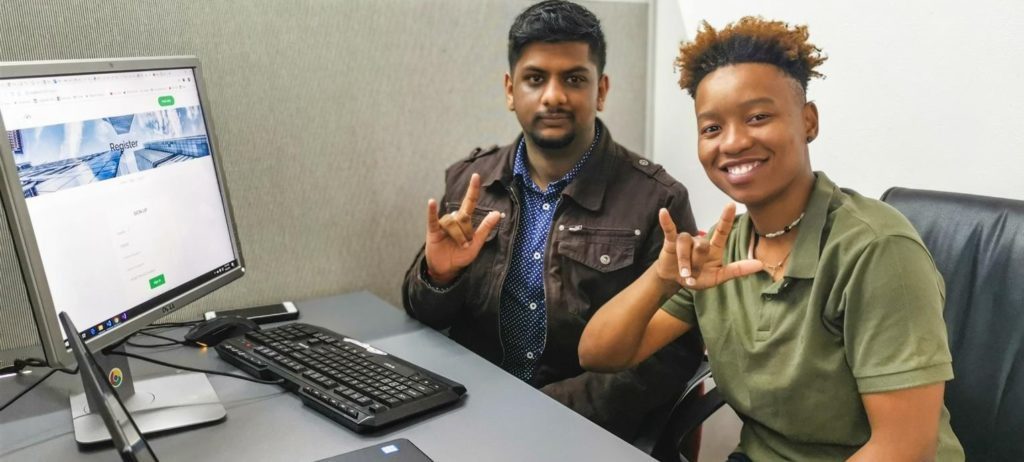
DEAF Careers 365 DEAF Careers 365 is an employment website being created by Belgium Campus iTversity Deaf internship students Thabo Mthimkulu, Nduduzo Miya and Mbuyiselo Ncayiyana. The website, similar to Disability Career 365, is being designed specifically for members of the Deaf community seeking employment and companies looking to hire Deaf employees. “Initially we were going to create a job website for the general disabled community but because most of our experience lies within the Deaf community and most of our contacts are also within the Deaf community, we decided to create DEAF Careers 365 instead,” Mthimkulu shares. There are more than 4 million Deaf and hard-of-hearing people living in South Africa but no employment websites that specifically cater for them. This means that they have to sift through a multitude of jobs to find companies looking to hire disabled people and even when they are successful, the companies may not completely understand what the different disabilities are and how they translate into the work environment. “A lot of companies that want to hire people with disabilities often do not want to hire Deaf people because they feel that communication will be too much of an issue, they would rather hire people with physical disabilities. I know Deaf people who have shown up for interviews only to be told the company was looking for someone with a different type of disability,” Mthimkulu says. DEAF Careers 365 will help prevent this because the companies on the site will specifically be looking to hire Deaf Individuals and as such will be aware of what it means to have Deaf employees, as well as the kind of work environment necessary to effectively accommodate them. “We know that the Deaf community in South Africa is very small and as a result our website may not be as successful as other job websites but that doesn’t mean there isn’t a need for it. We hope to visit companies that hire a lot of disabled individuals as well as Deaf owned businesses to make them aware of our site and why we feel it is important. Hopefully this will spark interest from a number of companies and they will register on our site,” Mthimkulu concludes.

DEAF Careers 365 Read More »

Disability Career 365

Disability Career 365 With South Africa’s unemployment rate sitting at 29% finding a job can be a tough task, this task becomes even more challenging for the 7.5 percent (2,870,130 people) of the population living with some form of disability.    With the above in mind, Deaf internship students Siyanda Kopolo and Sieshane Perumal decided to create an employment website that caters specifically for disabled jobseekers and companies looking to hire disables individuals.   The website, titled Disability Career 365, works the same way as any other employment website. “Companies looking for disabled employees can share their job vacancies and the requirements necessary, while disabled jobseekers can create a personal profile and upload their resume. Jobseekers can then apply for the available jobs and companies can contact the potential employees that they feel would be a good fit for their company” Kopolo explains.   “Companies often hire disabled people for the sake of BEE compliance but a lot of times they do not understand the different types of disabilities out there and the fact that people with certain disabilities are better suited to certain jobs,” Kopolo shares. In order to counter this issue, Disability Career 365 also includes information about the different types of disabilities, which jobs are suited to people with these disabilities and the work environments necessary to accommodate these individuals.     “A website like this will not only assist members of the disabled community to find work but it will also gather useful data regarding which types of disabilities get preference by companies during the selection process. This kind of data could help uncover biases within the job market and once these are uncovered South Africa can work towards dismantling them,” Tshepo Mohale, a software developer at Botlhale Village adds.  “We are just trying to level the playing field in any way we can,” Kopolo concludes.   Keep an eye on our various social media channels where we will be announcing the official website launch! 

Disability Career 365 Read More »

Deaf Information Hub

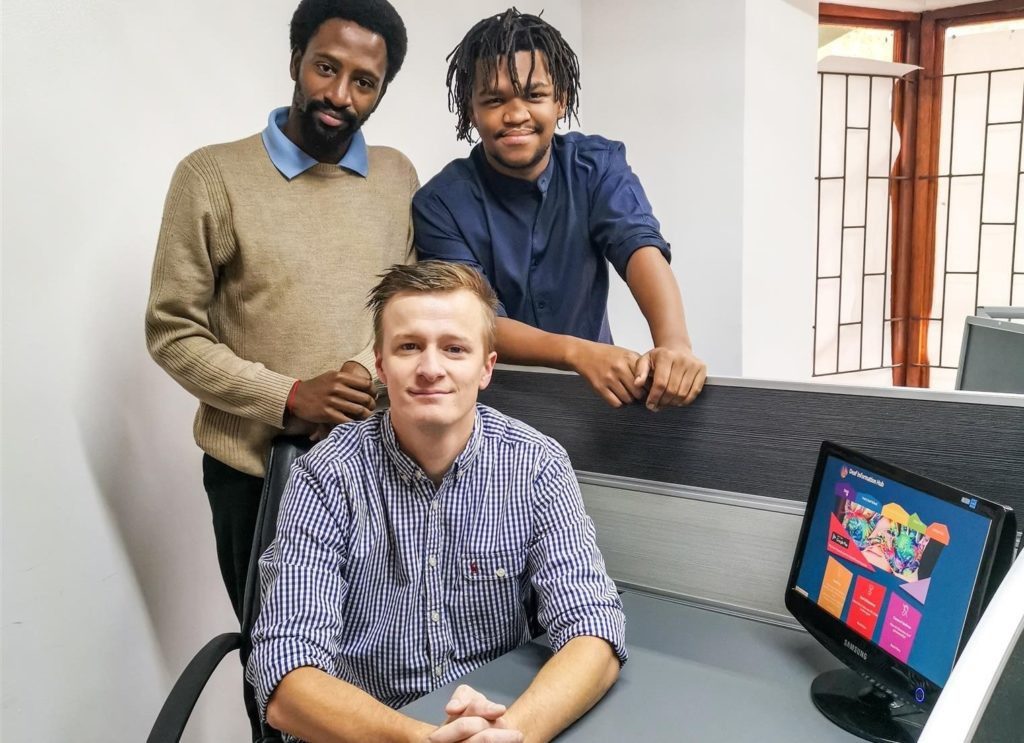
Deaf Information Hub Deaf Information Hub is a website designed to provide a number of useful resources to hearing parents with children with hearing loss and individuals who suddenly lose their hearing. It is being created by Deaf internship students Chezney van Groeningen, Bongumusa Mlaba and Jolin Jafta. “There are a lot of resources for the Deaf available on the internet but hardly any of these resources are specifically South African. We created this website to provide relevant resources to South Africans who need them,” Groeningen explains. When hearing is all you have ever known, losing this sense suddenly can be very difficult and confusing. People who suffer from sudden hearing loss often do not know where to start looking for resources to assist them. The same applies to hearing parents with Deaf children. According to the NIDCD, more than 90% of Deaf children are born to hearing parents. These parents usually have no prior experience with deafness or hearing loss and yet in a very short time they need to make serious, often life-altering choices for their child. “Hearing parents with Deaf children have the biggest influence on them but a lot of times hearing parents struggle to have a relationship with their child because they do not know how to assist or interact with them. These parents need access to impartial information and a supportive community, our website provides this” Groeningen says. Deaf Information Hub makes a number of valuable resources available. These resources include a directory of the schools for the Deaf in each province in South Africa, as well as a Deaf organization directory. The website also includes a section that outlines the causes of deafness, a sign language guide, a Deaf shop that provides information on where to purchase assistive devices like hearing aids or alarm clocks for the Deaf, and a section that celebrates the achievements of members of the Deaf community. “We thought it was important to include the achievements section to show Deaf people and the rest of the world that being Deaf does not have to affect your goals, Deaf people are capable of great things,” Groeningen explains. In addition to the above, the website also provides links to two other websites created by Deaf internship students at Belgium Campus. These website are DeafHUB, a website that focusses on education and assisting Deaf learners, and Disability Career 365, an employment website specifically designed for disabled jobseekers and organisations looking to hire disabled employees. Groeningen, Mlaba and Jafta are also working on a mobile app to make the resources on their website more accessible. “These days more people access information using their mobile phones which is why we decided to create a mobile application. We have already started learning the mobile programming language,” Groeningen shares. Keep an eye on our various social media channels to stay up to date about the mobile app and the official website launch!

Deaf Information Hub Read More »

DeafHUB

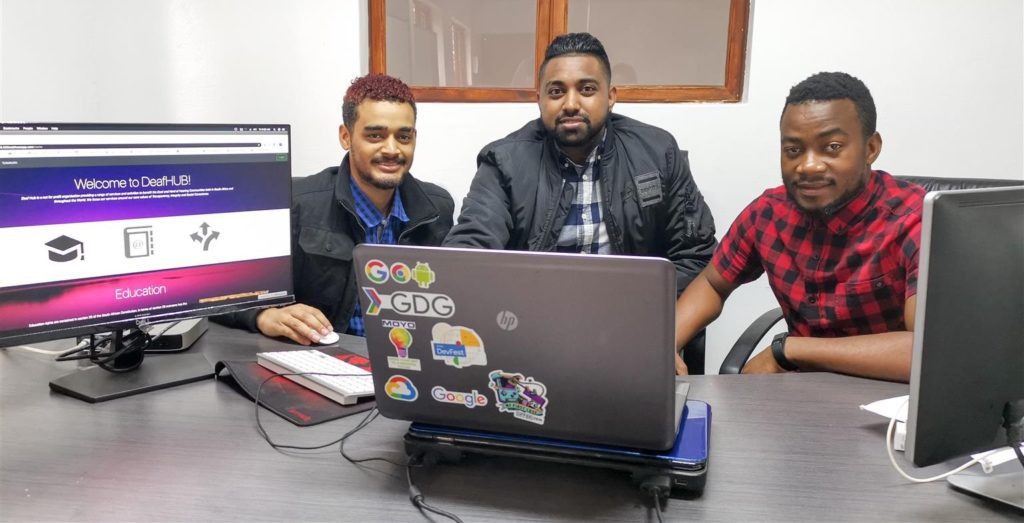
DeafHUB Belgium Campus iTversity Deaf internship students Violen Moonee, Yazeed Moosa and Norman Themba, are creating a website to assist members of the Deaf community as well as hearing individuals with Deaf people in their lives. The website, titled DeafHUB, mainly focusses on education and assisting Deaf learners. “We all went to a school for the Deaf and so we have personal experiences with what the issues are in schools like this, which is why we created this website,” Moonee says as he navigates through the site. Deaf and hard-of-hearing learners make up 5% of the school population in South Africa. According to the Human Sciences Research Council, the school attendance of these learners drops significantly between their early and late school years. “I know a lot of Deaf people who leave school at grade 9 because many of the teachers in the schools for the Deaf are not fluent in sign language, which makes it very difficult for Deaf students to perform well,” comments Moonee with concern. “Education is very important. Many Deaf people get frustrated and give up. They leave school without grade 12 and are left unable to find a job. They end up settling for a substandard life surviving of the disability grant provided by the government,” adds Tshepo Mohale, a software developer at Botlhale Village. These challenges do not end in the school environment. Hearing parents to Deaf children are often reluctant to learn sign language, whether it be because they are in denial or because their busy schedule makes it very difficult to. This not only affects their relationship with their child but also their ability to help with homework which can further hinder their child’s academic progress. “If you are unable to properly grasp the content in school and you do not have a good support system at home, how can you be expected to make something of yourself?” Moonee comments. Moonee, Moosa and Themba created their website with the above issues in mind. The website provides video lessons for maths, English and IT directed at secondary and high school learners, the lessons are all given in SASL. “We chose to focus on these subjects as we find that Deaf people tend to struggle with Maths and English, but there is always the possibility to add more subjects in the future should the need arise,” Moone shares. The internship group, all fluent in SASL, are currently presenting the classes but expressed that should the pilot be a success, they would like to get individuals who are both fluent in SASL and fully versed in the subject matter to present. In addition to the above, the website also contains a life skills section. This section provides important information and vocabulary pertaining to the requirements, as well as the necessary steps for everyday processes that hearing people take for granted but that Deaf people can find quite challenging. These processes include things like applying for a loan at the bank or applying for a learners licence at the traffic department. “Going to places like this is often a difficult and frustrating process for Deaf people because communication is always an issue and a lot of times we may not understand the vocabulary being used or what the requirements are. Our hope is that our website makes these processes easier for Deaf people and also assists Deaf learners and their parents” Moone concludes.

DeafHUB Read More »

Global Partnerships Promoting Global Solutions and Inclusivity

Global Partnerships Promoting Global Solutions and Inclusivity Belgium Campus iTversity and Pennsylvania State University have been working together since 2015 to promote global-thinking and intercultural awareness amongst students. Belgium Campus students work with students from Penn State University’s mechanical and electrical engineering faculties on joint industry innovation projects. These projects prepare students to enter the industry with ease and also provide them with a global perspective, allowing them to assimilate into the globalised world we live in and equipping them to tackle the challenges that come with it. This Women’s Month, we introduce you to two of the phenomenal women at Penn State University who help make this collaboration possible. These women are Dr. Meg Handley, Associate Director for Engineering Leadership Outreach and Dr. Dena Lang, Associate Director of the Engineering Leadership Research Program.

Global Partnerships Promoting Global Solutions and Inclusivity Read More »

Like-Minded Partnerships

Like-Minded Partnerships Belgium Campus strives to provide equal opportunities for all, with a specific focus on females and individuals with disabilities. We actively work with a number of major corporates to provide as many opportunities to our students as possible, both before and after graduation. These opportunities are in the form of bursaries, internships and job placements. We endeavour to form partnerships with companies that share similar values as us in order to work towards the same goal. One such company is Liberty, whom we have a longstanding relationship with. Liberty provides bursary support and meaningful work related projects to female students and students with disabilities in an effort to prepare them for the workplace. “Liberty values the importance of investing in youth, the future of our nation. We understand the potential of the girl child and aspire to make a difference in her life along with all the communities that we serve,” explains Leatitia Thoresson, Group Human Resource Operations Services Divisional Director at Liberty. In addition to the above, Liberty has and continues to recruit a number of our students post-graduation. We are excited to continue to build on this relationship and we are thrilled that they will be one of the companies joining us at our last Recruitment Day this Friday.

Like-Minded Partnerships Read More »

Translate »